Showing posts with label jonathan demme. Show all posts

Sunday, February 19, 2012

The Silence of the Lambs (1991) Review

The Silence of the Lambs  (1991)
Average Reviews:

(More customer reviews)
Pulp entertainment of the highest order, "The Silence of The Lambs" is terrific filmaking, and a movie worth owning for any horror/suspense fan. Unfortunately, the Blu-Ray release is sure to disappoint, as it looks strikingly similar to a finely upconverted DVD, albeit one with a fair amount of film grain. Yes, sharpness is slightly improved, but it's only really noticeable in a handful of scenes, and the difference is hardly impressive; the same can be said for the Blu-Ray's slightly-improved colors.
Some are attributing this to the MPEG-2 encoding, but really the problem lies with the film master source, which just isn't that great. Another contributing factor is the cinematography and lighting of the film, which just doesn't lend itself all that well to hi-def. The underwhelming DTS-HD 5.1 audio fares no better, again probably due to the limitations of the original audio source; the overall sound is flat with the rear channels and sub-woofer barely used, if at all. To top things off, this Blu-Ray release includes most, but not all, of the extras found on the previous DVD releases, meaning if you're a hardcore "Silence" fan, you'll want to to hang on to your old DVD(s).
Of course, the Blu-Ray edition does currently offer the best visual and audio presentation of this film, but the difference is decidedly unimpressive and contains far greater film grain than any of the previous DVD incarnations, to boot. As a side note, I want to state that I have no problem with film grain per say, and will always take the naturally grainy-albeit-sharp look of film over a waxy-looking DNR "remastering" any day of the week. Yet, when the only appreciable gain of a Blu-ray upgrade over its (1080P upconverted) DVD counterpart is a barely perceptible upgrade in sharpness, slightly stronger colors and extra-heavy doses of film grain (much of it stemming from a worn-looking master), then I say stick with the DVD, as the trade-off simply isn't worth it.
Regarding special features, while the majority of the bonus features included on the Blu-Ray are simply ported over from the 2007 DVD release, the Blu-Ray does contain one exclusive: a picture-in-picture commentary / trivia track called "Breaking The Silence", which has factoids mixed in with occasional snippets of new interviews from Jodie Foster, Scott Glenn, Anthony Heald, Anthony Hopkins, and screenwriter Ted Tally. Unfortunately, it sounds cooler than it really is; while the interview snippets are pretty good, there is no making-of footage of any kind included in the PIP, and the factoids mostly contain information that is recycled from earlier (more compelling) bonus features. Also, there are annoyingly long stretches throughout the film in which the PIP track simply disappears. Overall, a mediocre exclusive bonus feature at best, and decidedly inferior to Criterion's audio commentary track (or the previously made making-of docs, for that matter).
So, for those who DO NOT OWN any DVD edition of "Silence of The Lambs", this is what it boils down to:
- The Blu-Ray is currently reasonably priced here on Amazon.com and (depending on your tolerance for film grain) is therefore worth picking up;
- For hardcore "Silence" fans, they should seek out both the Blu-Ray AND the Criterion DVD, as the Criterion disc contains special features that are not contained in any other edition of this film on home video, particularly an outstanding (and exclusive) audio commentary track that includes Foster, Hopkins and director Ted Demme. As I type this, it's still the overall best making-of feature made for "Silence", IMO.
- Be advised that the Criterion DVD has the weakest visual presentation of the various DVD releases, as the picture on that disc is in non-anamorphic widescreen, which is why I recommend the Criterion version to Criterion collectors and hard-core "Silence" fans only;
- For the price conscious, the 2001 "Special Edition" DVD can be had for under $5.00, has good (anamorphically-enhanced) video and (5.1 Dolby Digital) audio, and a nice set of special features, including the same hour-long making-of doc ("Inside the Labyrinth") that is included in both the Blu-Ray and 2007 DVD edition; although it lacks interviews from Foster and Demme, it's probably the best making-of feature that's been produced for "Silence", outside of the superior Criterion audio commentary.
- As for those who ALREADY OWN "Silence of The Lambs" in either the 2001 or 2007 DVD incarnations, there really is no compelling reason to upgrade to the Blu-Ray edition, unless you are an obsessive-compulsive Hi-Def completest with money to burn. The fact is, both the 2001 and 2007 DVD editions contain comparable audio and visuals that perfectly represent the original look of the film (although the 2001 "Special Edition" DVD release has a slightly greener hue to its video transfer, while the 2007 transfer has a slightly redder hue) and both editions look perfectly fine upconverted via 1080P. Never mind the naysayers who hate DVD upconversions, as there are some of us who can settle for "good enough" with certain films and save our hard-earned cash for far worthier hi-def material.

Click Here to see more reviews about: The Silence of the Lambs (1991)

A psychopath nicknamed Buffalo Bill is murdering women across the Midwest. Believing it takes one to know one, the FBI sends Agent Clarice Starling (Foster) to interview a demented prisoner who may provide clues to the killer's actions. That prisoner is psychiatrist Dr. Hannibal Lecter (Hopkins), a brilliant, diabolical cannibal who agrees to help Starling only if she'll feed his morbid curiosity with details of her own complicated life. As their relationship develops, Starling is forced to confront not only her own hidden demons, but also an evil so powerful that she may not have the courage or strength to stop it!

Buy NowGet 52% OFF

Click here for more information about The Silence of the Lambs (1991)

Saturday, February 18, 2012

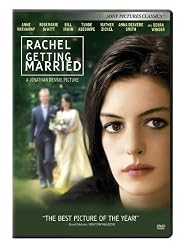
Rachel Getting Married (2008) Review

Rachel Getting Married (2008)
Average Reviews:

(More customer reviews)
Sitting through a movie about sibling rivalry at a wedding, especially one starring the doe-eyed and normally facile Anne Hathaway, sounds like a potentially painful way to spend an evening. However, as directed by Jonathan Demme and written by Jenny Lumet (daughter of master filmmaker Sidney Lumet), this 2008 drama is not a lightweight star vehicle à la Julia Roberts circa 1997 but a darkly realistic look at the dysfunction within a family thrown into disarray. Using an almost cinéma vérité style, Demme explores how a wedding reopens old wounds within a family in a naturalistic way made all the more palpable by the emotional acuity in Lumet's screenplay.
The focus is on Kym, a chain-smoking former model who has spent the last several months in rehab. As a substance abuser whose only armor is cutting sarcasm, she is absurdly hopeful that her sister Rachel's wedding will be a harbinger for unconditional love from her upscale Connecticut family. Therein lies the problem as her narcissism provides the catalyst for long-simmering tensions that uncork during the preparations for a lavish, Indian-themed wedding weekend (the movie's working title was "Dancing with Shiva"). It soon becomes clear that Kym's link to a past tragedy is at the core of the unpredictable dynamics that force confrontations and regrettable actions among the four principal family members. Rachel appears to be Kym's sensible opposite, but their alternately close and contentious relationship shows how they have not fully recovered from past resentments. Their remarried father Paul is a bundle of loving support to the point of unctuous for both his girls, while their absentee mother Abby is the exact opposite - guarded and emotionally isolated until she is forced to face both her accountability and anger in one shocking moment.
Anne Hathaway is nothing short of a revelation as Kym. Instead of playing the role against the grain of her screen persona, she really shows what would happen if one of her previous characters - say, Andy Sachs in The Devil Wears Prada - went another route entirely. The actress' studiousness and persistence are still very much in evidence, but the story allows her to use these traits under the guise of a self-destructive, often unlikable addict who gains attention through her outrageous self-absorption. As the put-upon title character, Rosemarie DeWitt realistically shows Rachel's sense of pain and resentment as the attention veers to Kym during plans for the most important day of her life. Bill Irwin is winning as the unapologetically grateful Paul, but it's really Debra Winger who steals her all-too-brief scenes by bringing the remote character of Abby to life. Now in her early fifties, the famously tempestuous actress seems to rein in her innate fieriness to play a woman who consciously disconnects herself from the family she raised. What remains is a crumbling façade of propriety masking this obvious gap. It's similar to Mary Tyler Moore's turn as the cold mother in Ordinary People, but casting the normally vibrant Winger (who probably would have played Kym a quarter century ago) is a masterstroke.
The film is not perfect. Demme's home-video approach, while novel at first, proves wearing over the 114-minute running time. Pacing is also a problem, especially when the focus turns to the minutiae of the wedding ceremony and reception. I wish Demme could have cut this part of the film, so we could get to the icy, unfinished resolution sooner. As a filmmaker who obviously enjoys making music concert films (Stop Making Sense, Neil Young - Heart of Gold), there are quite a few musical performances presented in total. However, for non-aficionados, it may prove too much over time. While it's refreshing to see interracial marriages treated so casually (Lumet's grandmother is legend Lena Horne), Demme makes almost too big a point in presenting a global community though the diverse music and the wedding's multi-cultural themes. The movie starts to feel like a Putumayo collection of third-world performances. Still, Demme's intentions can't be faulted, and neither can the piercing work of Hathaway and Winger.

Click Here to see more reviews about: Rachel Getting Married (2008)

When Kym (Anne Hathaway - Golden Globe Nominee, Best Actress, Motion Picture (Drama)), returns to the Buchman family home for the wedding of her sister Rachel (Rosemarie DeWitt), she brings a long history of personal crises, family conflict and tragedy along with her. The wedding couple's abundant party of friends and relations have gathered for a joyful weekend of feasting, music and love, but Kym - with her biting one-liners and flair for bombshell drama - is a catalyst for long-simmering tensions in the family dynamic. Filled with the rich and eclectic characters that remain a hallmark of Jonathan Demme's films, Rachel Getting Married paints a heartfelt, perceptive and sometimes hilarious family portrait.

Buy NowGet 60% OFF

Click here for more information about Rachel Getting Married (2008)

Thursday, June 30, 2011

Crazy Mama (1975) Review

Crazy Mama (1975)
Average Reviews:

(More customer reviews)
okay, so the print was not perfect but from the other comments i was expecting it to be horrible. it was not that bad. people cannot expect all dvd releases of older cult titles to be given the VIP treatment since i'm sure there is not an enormous ammount of money to be made by the releaser. i'm just glad to have it on DVD. Ann Sothern and Cloris Leachman are a hoot, Don Most, pre-Happy Days, is great, and Linda Purl is drop dead gorgeous. This is a great buy if you like Bloody Mama and Big Bad Mama, the other two movies in the out of control outlaw women triumverate. Which reminds me, why the hell isn't Bloody Mama on DVD?

Click Here to see more reviews about: Crazy Mama (1975)

Item Name: Crazy Mama; Studio:New Concorde

Buy Now

Click here for more information about Crazy Mama (1975)