Showing posts with label vietnam war. Show all posts

Saturday, December 29, 2012

Apocalypse Now - The Complete Dossier (Two-Disc Special Collector's Edition) (1979) Review

Apocalypse Now - The Complete Dossier (Two-Disc Special Collector's Edition) (1979)
Average Reviews:

(More customer reviews)
I'm a hardcore Apocalypse Now fanatic, and this, the original version of the film, is what made me one, several years ago. Reviewers like to debate endlessly over which version is better, this or the Redux. Personally, I like both, but I find this original version to be more surreal, relentless, and, to quote another reviewer, more "dangerous." The fact is, Coppola used different shots and edits in the Redux, in some cases diluting the surreal impact of the original. Plus the characters Kilgore and Kurtz come off more strongly in the original; sure, we get to see more humanity from Kilgore in the Redux, but his exit in the original is much more memorable, much better than the "tossing megaphone into the air" antics as shown in the Redux. And Kurtz is a more powerful Evil One in the original version, not much more than a shadow.
What gets me is that, in the press releases that came out with Redux, Coppola claimed that he no longer considered the 1979 version of Apocalypse to be "unusual." He felt that, today, it comes off as a rather ordinary film. So he integrated an extra 50 minutes into the movie, to make it more unusual. The thing is, the Redux is, if anything, MORE normal than the original. After all, you get more character development, a romantic subplot, etc; all the things the unusual (and unique), original version lacked. The very lack of these things is what gives the original such a mysterious, dangerous edge. There is no levity in the original, no stealing of surfboards, no Playmates for the PBR crew. Only the dark jungle, and the mission.
If it's true that Coppola wanted to make the original version even more unusual, then I wonder why he chose to add the Plantation sequence and the Playboy Bunnies escapade. Having seen the Work Print, I know that there is a wealth of material Coppola could've used. Bizarre? Unusual? How about a scene in which Martin Sheen's Willard, trapped in a bamboo cage, writhes in pain as the montangnards (and Kurtz's American soldiers) dance and chant around him, as they sacrifice a pig? Or how about Willard, still in the cage, being questioned by Kurtz, who tells Willard that he's as weak as his "colleagues in Washington?" Or how about possibly the most bizarre scene of all: Dennis Hopper's Photojournalist being shotgunned to death by Scott Glenn's character Colby?
Coppola could have used any or all of these scenes to make a truly "unusual" film, one that would successfully create a darker film. If anything, the extra scenes in Redux lighten the film's mood. Coppola could have even improved on the end of the movie. That's one thing that's always bothered me about Apocalypse Now. Willard's hired to murder Kurtz; when he finally does, all he has to do is just walk into Kurtz's temple, take out one guard, and then get to hacking at Kurtz. It comes off as so easy, you wonder why the Army even bothered hiring Willard. This problem is solved in the Work Print, which features Willard taking on a host of guards, including one grisly scene in which he spears an American guard who cowers behind a young, Vietnamese boy. Now, if you ask me, that's more "unusual" than a bunch of French people arguing politics at the dinner table! But unfortunately, Coppola has chosen not to use these scenes, in either official version of the film.
I don't intend to mislead, though. I think the Redux is fine, a five-star movie. It expands on the broader themes of Apocalypse Now, but at the same time lessens the impact of the movie itself. After having watched the Redux a few times, I popped the original in for the first time in a few years. I was amazed at how the film seemed so different than the Redux, so much more psychedelic and surreal. Even the fades and images shown in the beginning and the end are different in the original, more disturbing. And that's the main difference between the two versions: the original is much more disturbing.
I'll finish with another quote, taken from the web. Which director do you think is better, the Francis Coppola of 1976/1979, or the Francis Coppola of 2001? Of these two very different directors, whose vision would you be more willing to trust?
1/27/09 update: Six years ago I also had a review for the "Redux" DVD here on Amazon. Somehow it's been removed from the site -- it seems Amazon has combined the reviews for the original Apocalypse Now DVD release with the reviews for the "Redux DVD" release. And since Amazon has a policy that a reviewer can only post one review per item, it appears that my "Redux" review got the boot. I've rescued it from oblivion via a Google cache search; please see the Comments section, below, for the review.

Click Here to see more reviews about: Apocalypse Now - The Complete Dossier (Two-Disc Special Collector's Edition) (1979)

Nominated for 8 Academy Awards, this classic and compelling Vietnam War epic stars Martin Sheen as Captain Willard, who is sent on a dangerous and mesmerizing odyssey into Cambodia to assassinate a renegade American Colonel named Kurtz (Marlon Brando), who has succumbed to the horrors of war and barricaded himself in a remote outpost.Also stars Robert Duvall, Laurence Fishburne, Dennis Hopper and Harrison Ford.

Buy Now

Click here for more information about Apocalypse Now - The Complete Dossier (Two-Disc Special Collector's Edition) (1979)

Saturday, September 15, 2012

Casualties of War (1989) Review

Casualties of War (1989)
Average Reviews:

(More customer reviews)
Casualties of War is a unique film. There are many films that depict wartime atrocities. This one stands above the rest because of it's character development. We get to know the guilty parties, and they are not purely evil, but are in many ways quite ordinary. They seem like regular US GI's at first, just trying to survive day by day.
Sean Penn's character (Sgt Meserve) leads them into an abyss, and only one of them (Eriksson, played by Micheal J Fox) refuses to enter. The others commit murder and rape, while Eriksson cringes. The separate perpetrators display trepidation, anxiousness, remorse and the lack thereof. Other characters exhibit cynicism and callousness. Their victim shows her fear alone.
This film is effective because it shows all but one of the soldiers as having different and human sides. Eriksson and Diaz (John Leguizamo) know that what is happening is wrong, but one fails to stop it, and the other participates. Meserve comes up with absurd lies to try to justify what they are doing, not only for Eriksson, but for the others, and it seems even for himself. Only one character in this film (Clark) is completely inhuman. His sadistic fervor and amoral smugness makes him appear as a monster, plain and simple.
This film is effective because it shows seemingly normal men in a descent into utter barbarism. Thuy Thu Le sets the mood for this by portraying the terror of their victim so well. Sympathy for the victim will surely make anyone cringe. But, it is by showing that the perpetrators, except Clark, are like most anyone that this film has its' strongest affect. How would we each fare if faced by such a situation? Who among us would stand against it? Who would succumb to it? This film strikes deeper than any horror film, with obviously inhuman monsters. It shows real people who become monsters, and is therefore vastly more effective- even more so because it all really happened.

Click Here to see more reviews about: Casualties of War (1989)

CASUALTIES OF WAR - DVD Movie

Buy NowGet 50% OFF

Click here for more information about Casualties of War (1989)

Friday, August 17, 2012

The U.S. vs. John Lennon Review

The U.S. vs. John Lennon
Average Reviews:

(More customer reviews)
THE US VS. JOHN LENNON is a riveting documentary that shows how the judicial and immigration system works in the United States. John Lennon was placed under the microscope by President Nixon and the US FBI during the early 1970s because he posed as a threat to Nixon's political campaign, and an intense influence on the youth of America as a result of his music and iconoclastic image. Bottom line, the film focuses on Lennon's activism as well as the controversial and gray aspects of the meaning of activism and dissent.
Director David Leaf interweaves Lennon's music within the documentary with a collage of images of the mop-top Beatle to the bearded-hippie shouting for world peace from an Amsterdam hotel room alongside the press and fellow peers. The core participants and leaders of the late 1960s and early 1970s are presented in the film, such as John Sinclair, Angela Davis, J. Edgar Hoover, President Richard M. Nixon, and various writers and journalists who reported about Lennon. The interesting aspect are the recent interviews of those political activists who attempted to make a mark on society. Within Leaf's documentary is the past, but the political atmosphere of the present appears to parallel or bear similarities to the past.
THE US VS. JOHN LENNON is entertaining. In light of serious events that occurred in Lennon's life, he tend to press on. There are funny moments in the film as well as serious ones. But the film also presents the chilling aspects of the system of government, and the powers that be. Lennon may have been one the last influential figures of the 1960s who spoke and sang a thousand words to a generation that just wanted to be listened and understood, and politics did not stop him from creating his love of music for all to hear.
This film is highly recommended for all Lennon fans as well as those who would like to understand the relationship between politics and music.

Click Here to see more reviews about: The U.S. vs. John Lennon

The compelling and provocative story of John Lennon's evolution from beloved Beatle to outspoken artist and activist to iconic inspiration for peace, and how, in the midst of one of the most tumultuous times in American history, Lennon stood his ground, refused to be silenced and courageously won his battle with the U.S. Government.

Buy NowGet 20% OFF

Click here for more information about The U.S. vs. John Lennon

Monday, April 16, 2012

Hearts of Darkness - A Filmmaker's Apocalypse (1991) Review

Hearts of Darkness - A Filmmaker's Apocalypse (1991)
Average Reviews:

(More customer reviews)
Subtitled, "A Filmmaker's Apocalypse", this 1991 film is a documentary about the making of "Apocalypse Now", the 1979 film based on Joseph Conrad's "Heart of Darkness". Set in Vietnam, it is the story of a captain, Martin Sheen, and his crew's mission to find and kill an insane colonel, Marlon Brando, who had created his own kingdom deep in the Jungle. On the way, everyone is touched with the evil around them. This summer I saw the re-edited version of the film and have been intrigued by it ever since. When I heard about this "Hearts of Darkness" I just HAD to see it.
The filming of Apocalypse Now was supposed to take just sixteen weeks at a budget of $13 million. It wound up costing more than $30 million, much of it put up by Francis Coppola himself, and took almost three years to get to the public. Coppola' wife Eleanor and their three children went along on location in the Philippines. She was interested in making a documentary and shot a lot of behind-the-scenes footage, even secretly recording private conversations she had with her husband about the film. The authenticity of the experience really comes through, as everyone involved with the production seemed to go a little bit insane.
Coppola had serious doubts throughout and we hear his words of despair as he thinks he's making a bad movie. We see the terrible typhoon that destroyed all the sets and realized that the helicopters that were being used for the shooting were actually property of the Philippine government who kept calling them away to fight a real disturbance that was going on just ten miles away. We see shots and scenes that never made it into the original film (although much of it eventually made it into the 2001 "Redux" version). We see and overweight Marlon Brando who insisted on being filmed in shadows. And we are right there to watch the filming of the scene in which Martin Sheehan has a mental breakdown. In order to do this he became bleary-eyed drunk, cut his thumb on a mirror and used the blood as part of the scene. The intensity is chilling and when, a short time afterward, he has a life-threatening heart attack at the age of 36, we're all there to see him as he is given first aid.
Now, years later, some of the actors are interviewed about their experiences. We learn that they did a lot of drugs during many of the scenes - acid, speed, marijuana, alcohol, which certainly added to the authenticity as well as the craziness of the whole production. Robert Duval talks about how his famous line "I love the smell of napalm in the morning was improvised. And the whole cast talks about how they improvised a massacre scene. Laurence Fishburne was only 14 when the film was made, a real coming-of-age experience for him. But this very stirring film portrait belongs to Francis Coppola. We get to meet him as a very imperfect human being doing his best to create an art form out of the script, changing it constantly as he went along, and eventually turning out a small masterpiece which went on to be nominated for eight academy awards.
I give this video my highest recommendation. It is a "must" for movie buffs. And an essential education for anyone involved in filmmaking itself. Don't miss it!

Click Here to see more reviews about: Hearts of Darkness - A Filmmaker's Apocalypse (1991)

Hearts of Darkness: A Filmmaker’s Apocalypse is an engrossing, unwavering look back at Francis Ford Coppola’s chaotic, catastrophe-plagued Vietnam production, Apocalypse Now. Filled with juicy gossip and a wonderful behind-the-scenes look at the stressful world of moviemaking, the documentary mixes on-location home movies shot in the Philippines by Eleanor Coppola, the director’s wife, with revealing interviews with the cast and crew, shot 10 years later.

Buy NowGet 28% OFF

Click here for more information about Hearts of Darkness - A Filmmaker's Apocalypse (1991)

Tuesday, March 20, 2012

The Most Dangerous Man in America: Daniel Ellsberg and the Pentagon Papers (2009) Review

The Most Dangerous Man in America: Daniel Ellsberg and the Pentagon Papers (2009)
Average Reviews:

(More customer reviews)
Dan Ellsberg, the reader probably knows, is the analyst who leaked the Pentagon Papers to the press during the early 1970s. The Vietnam war had been raging, and all of a sudden the mainstream press had access to secret documents that showed, first, that plans had been in place for invasion of Indochina from the time Truman was in office, and that from Truman on, presidents had been lying to us up to and including the alleged attack of two US ships on the Gulf of Tonkin in 1964 which caused the real explosion of that war.
What many people don't know about Dr. Ellsberg is that he was an officer in the Marine Corps before he went into the academic world, then became a Rand Corp. analyst.
The most interesting element of the film is the process of watching Ellsberg change. He even examined a little of what led him into the Marines, wondering, he thought, whether he could make it. He ended up being the only 1st lieutenant overseeing 211 other Marines in a rifle company. While there, he still seemed to believe in "the system."
Early in the film, it seemed like it may go into a pscho-babble direction, i.e., diagnosing why he did what he did, But that wasn't, fortunately, taken too far. But while working for the system--being part of that system that perpetuated the war-- his conscience began to bother him. He talked with others, notably Tony Russo, who encouraged him to follow his conscience.
The film went from a silhouetted "actor" portraying Ellsberg on the phone, or in discussions with others, to an occasional animation. But the animation wasn't frivolous. Some of it was, for example, of his kids and he xeroxing the top secret papers, the police coming to the door on an unrelated incident, and Ellsberg almost embarassingly describing how the police had no idea what was going on right under their noses.
Throughout the film, there were graphics of a reel-to-reel tape player accompanied by the "surtitles" of what President Nixon was saying, to Henry Kissinger, to Al Haig, and to others, the profanity for which Nixon was notorious, and how he was going to get Ellsberg, etc. etc.
Another interesting perspective of Ellsberg on the press's reaction to what his use of tangible figures to describe the war: he'd tell reporters how much bomb tonnage was dropped in Vietnam, and compared it to Hiroshima. (At the very beginning of the film, someone, I don't recall who, stated something about the most overbombed country in history or something to that effect; the amount of bombing we did over that little country was beyond anything that had been done before, even on developed countries!) But the press didn't seem to make note of those figures, something measurable by which to evaluate the damage we were inflicting on Vietnam despite how often Ellsberg cited them.
There may have been a little more adoration of Ellsberg than was appropriate. But my saying that is as much speculation, and I guess some of my own skepticism coming out. For instance, Ellsberg had been anxious to get the material published in the NY Times, and pressed them to release it. Then the FBI was on the prowl for him. But he wanted more and more elements of the press to get it. The film made it look like it was his strategy, or tenacity, that caused seventeen publications, including the Philadelphia Inquirer, the LA Times and others, to release more of the papers. My skepticism leads me to think there was as much chance to that many publications getting access to the information, but, again, perhaps I'm speculating.
When the FBI finally caught up with Ellsberg and Russo, they were on trial for long terms, in Ellsberg's case, for up to 115 years. But during the trial, it turned out that the government had been bugging Ellsberg for years before the Pentagon Papers were even an issue. The government had bungled the case so badly that a mistrial was called, and Nixon responded with his usual comments.
What intrigued me most about the film is the connections that it made between the release of the Pentagon Papers, the Watergate incident, and the eventual downfall (resignation) of Nixon. At least according to the film, they were closely related with the Papers release having catalyzed the whole process.
Shelving my skepticism for now, until it's challenged, I'll buy that contention of the film. Again, it's not a connection I'd made before but it sure seems logical after seeing this film which should be shown to every class in high school or college dedicated to the study of the Vietnam conflict.

Click Here to see more reviews about: The Most Dangerous Man in America: Daniel Ellsberg and the Pentagon Papers (2009)

2010 Oscar Nominee for Best Documentary Co-winner of 2009 Freedom of Expression Award from the National Board of Review (and one of their Five Best Documentaries of the Year), Winner of the Special Jury Award at IDFA, and now nominated for the Academy Award for Best Documentary, The Most Dangerous Man in America tells the story of Daniel Ellsberg, a high-level Pentagon official and Vietnam War strategist, who in 1971 concluded that the war is based on decades of lies and leaks 7,000 pages of top secret documents to The New York Times, making headlines around the world. A riveting story of how this one man's profound change of heart created a landmark struggle involving America's newspapers, its president and Supreme Court. With Daniel Ellsberg, Patricia Ellsberg, Tony Russo, Howard Zinn, Hedrick Smith, John Dean, and, from the secret White House tapes, Richard Nixon and Henry Kissinger, who called Ellsberg "the most dangerous man in America."

Buy NowGet 39% OFF

Click here for more information about The Most Dangerous Man in America: Daniel Ellsberg and the Pentagon Papers (2009)

Friday, February 24, 2012

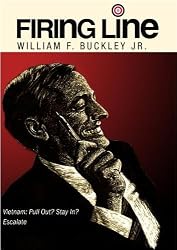
Firing Line with William F. Buckley Jr. "Vietnam: Pull Out? Stay In? Escalate?" Review

Firing Line with William F. Buckley Jr. Vietnam: Pull Out Stay In Escalate
Average Reviews:

(More customer reviews)
During the brief moments when Norman Thomas is not pontificating whimsical platitudes Buckley elucidates the utter puerility involved in the argumentation of Thomas. For some reason Thomas has beguiled himself into believing that voting for totalitarianism is somehow equivalent to self-determinism (even though such a premise is antithetical to itself). Of course by the end Thomas was just as befuddled as in the beginning having grasped very little of what Buckley had said.

Click Here to see more reviews about: Firing Line with William F. Buckley Jr. "Vietnam: Pull Out Stay In Escalate"

Taped on April 8, 1966 Mr. Thomas--the grand old man of the American Left, six-time Socialist Party candidate for President--was by this point focusing all his energies on opposition to America's involvement in the Vietnam War. This often fierce exchange, which places both men on the firing line, begins with Buckley's asking why his guest supported the Korean War but opposes the Vietnam War and goes on to explore whether it is realistic even to aspire to "contain" Communism. Thomas: "Mr. Buckley, you seem to believe in cruelty as a necessary adjunct to this kind of war. Your main point is that somehow we're going to contain Communism this way, and we aren't. We may delay certain events in Communism. We're not going to contain it. We--"" Buckely: "Excuse me, was the war in Greece cruel? Did we contain the Communists in Greece?" Summary by Firing Line Staff
This product is manufactured on demand using DVD-R recordable media. Amazon.com's standard return policy will apply.

Buy Now

Click here for more information about Firing Line with William F. Buckley Jr. "Vietnam: Pull Out Stay In Escalate"

Monday, November 21, 2011

Maya Lin - A Strong Clear Vision (1995) Review

Maya Lin - A Strong Clear Vision (1995)
Average Reviews:

(More customer reviews)
This documentary film is a unique experience for which it is difficult to find a comparison. On a basic level, the film discusses several projects of artist/architect Maya Lin, a young Chinese-American woman who unexpectedly won the design competition for the Vietnam Veterans Memorial while a Yale student. Her design, a departure from conventional expectations, is now famous, and is the most visited memorial in Washington D.C. Some of the strong feelings that the Vietnam War elicits in people, especially its veterans, is touched upon in moving live scenes at the Memorial and in the controversial hearings that were held in the wake of the design's selection. The experience put Maya Lin in a national spotlight and forced the student to mature very quickly addressing the grievances of veterans and others. In the end, with some minor site additions, the Memorial stood as designed, with the names of all the soldiers who gave their lives in Vietnam etched in its simple, polished, reflective granite. Other works of Maya Lin, including the Civil Rights Memorial in Montgomery, Alabama; the Yale Women's Table; and others demonstrate a similar simplicity and poetry that is both moving and powerful. There are moments in the film, as simple as when the artist is working at her drafting table, that suggest something both beautiful and spiritual, providing a deep insight into the creative process of this noted public artist.

Click Here to see more reviews about: Maya Lin - A Strong Clear Vision (1995)

Studio: New Video GroupRelease Date: 05/27/2003Run time: 83 minutesRating: Nr

Buy NowGet 50% OFF

Click here for more information about Maya Lin - A Strong Clear Vision (1995)

Sunday, August 14, 2011

We Were Soldiers (Widescreen Edition) (2002) Review

We Were Soldiers (Widescreen Edition) (2002)
Average Reviews:

(More customer reviews)
I live with a Vietnam Vet who served in the late 1960s with 1st Cav. Medivac. During service he earned two Purple Hearts, the Distinguished Flying Cross, and the Air Medal. Since WE WERE SOLDIERS concerns the 1st Cav., Randy wanted to see it. I reluctantly agreed; I am not partial to war films and I dislike Mel Gibson, and Randy is very hard on Vietnam War films. He dismisses PLATOON as a Hollywood 8x10 glossy; says APOCALYPSE NOW is an interesting movie that captures the paranoia, but all the technical details are wrong; and describes DEER HUNTER as excellent in its depiction of the strangeness of coming home but so full of plot holes that he can hardly endure it. And about one and all he says: "It wasn't like that."
He was silent through the film, and when we left the theatre I asked what he thought. He said, "They finally got it. That's what it was like. All the details are right. The actors were just like the men I knew. They looked like that and they talked like that. And the army wives too, they really were like that, at least every one I ever knew." The he was silent for a long time. At last he said, "You remember the scene where the guy tries to pick up a burn victim by the legs and all the skin slides off? Something like that happened to me once. It was at a helicopter crash. I went to pick him up and all the skin just slid right off. It looked just like that, too. I've never told any one about it."
In most respects WE WERE SOLDIERS is a war movie plain and simple. There are several moments when the film relates the war to the politics and social movements that swirled about it, and the near destruction of the 1st. Cav.'s 7th Battalion at Ia Drang clearly arises from the top brass' foolish decision to send the 7th into an obvious ambush--but the film is not so much interested in what was going on at home or at the army's top as it is in what was actually occurring on the ground. And in this it is extremely meticulous, detailed, and often horrifically successful. Neither Randy nor I--nor any one in the theatre I could see--was bored by or dismissive of the film. It grabs you and it grabs you hard, and I can easily say that it is one of the finest war movies I have ever seen, far superior to the likes of SAVING PRIVATE RYAN, which seems quite tame in comparison.
Perhaps the single most impressive thing about the film is that it never casts its characters in a heroic light; they are simply soldiers who have been sent to do a job, and they do it knowing the risks, and they do it well in spite of the odds. Mel Gibson, although I generally despise him as both an actor and a human being, is very, very good as commanding officer Hal Moore, and he is equaled by Sam Elliot, Greg Kinnear, Chris Klein, and every other actor on the battlefield. The supporting female cast, seen early in the film and in shorter scenes showing the home front as the battle rages, is also particularly fine, with Julie Moore able to convey in glance what most actresses could not communicate in five pages of dialogue. The script, direction, cinematography, and special effects are sharp, fast, and possess a "you are there" quality that is very powerful.
Randy did have a criticism. "I don't think there would be time for casualty telegrams to actually get home while the battle was going on," he said. "After all, it only lasted three days." I myself had a criticism; there were points in the film when I found the use of a very modernistic, new-agey piece of music to be intrusive and out of place. And we both felt that a scene near the end of the movie, when a Vietnamese commander comments on the battle, to be improbable and faintly absurd. But these are nit-picky quibbles. WE WERE SOLDIERS is a damn fine movie. I'll give Randy, who served two tours of duty in Vietnam, the last word: "It may not be 'the' Vietnam movie. I don't think there could ever be 'the' Vietnam movie. But they get everything right. That's how it looked and sounded, and that's what I saw, and this is the best movie about Vietnam I've ever seen."

Click Here to see more reviews about: We Were Soldiers (Widescreen Edition) (2002)

WE WERE SOLDIERS - DVD Movie

Buy NowGet 27% OFF

Click here for more information about We Were Soldiers (Widescreen Edition) (2002)