Showing posts with label documentaries. Show all posts

Monday, February 11, 2013

Who Are The DeBolts? (And Where Did They Get 19 Kids?) (1977) Review

Who Are The DeBolts (And Where Did They Get 19 Kids) (1977)
Average Reviews:

(More customer reviews)
"Who Are the DeBolts? (And Where Did They Get 19 Kids?" won the 1977 Academy Award for Best Documentary Feature. It was up against "Children of Theater Street," "High Grass Circus," "Homage to Chagall: The Colours of Love," and "Union Maids." I mention this simply because looking over this list it is rather striking to realize how much documentary films have changed in the past three decades. Today the attention is paid to expose documentaries by the likes of Michael Moore, while what we have here is a documentary that celebrates its subject.
When Dorothy DeBolt's first husband died, she was left a widow with seven children, two of who were adopted from Korea. She moved to the San Francisco Bay Area in 1969 and adopted two Vietnames boys who had been made paraplegics by the war. She then met and married Bob DeBolt, who had a daughter from his previous marriage. The DeBolts went on to adopt ten more children, nine of who were physically handicapped. The finally tally shows seven adopted children from Vietnam, four from Korea, one from Mexico, one African-American, and one Caucasian. John Korty's documentary shows us that this remarkable family and not only how they function each day but how they meet the many challenges posed by their particular situations.
The documentary only runs 72 minutes so some of the kids get more of the spotlights than others. Karen was born without arms or legs and not only learns to play the xylophone in the school band but how to do her share of chores around the house. J.R. is the latest addition to the family and although he is blind and can only walk with crutches, he insists on going to public school and the inspirational highpoint of this film might be watching him make his way from the house to where he catches the bus to school. Not that this story is wall-to-wall miracles, as you shall see, but you have to be impressed by the way Dorothy and Bob are raising these kids (and how they all help to raise each other). There is a lot of love here to be sure, but there is also the DeBolts' insistence that their children fit not only in the idealized household of this Melting Pot home but in the real world as well.
Of course, it will be difficult for most parents to watch this documentary and not feel like something of a failure in comparison. After all, if you have ever reached the end of your patience as a parent and you can count the number of your children on one hand, then how could you ever manage to deal with nineteen children, even without mixing special needs into the equation? Surprisingly, Dorothy and Bob do not come across as saints or miracle workers but rather as loving people with MONDO organizational skills. Korty is not particularly skilled as a filmmaker, but basically even if you are not doing anything special you cannot really go wrong pointing your camera at this family.
On the DVD extras you will find a 1982 featurette, "Steppin' Out: The DeBolts Grow up," which runs 49 minutes and is directed by Jon Else, who was the cinematographer on the original documentary. This gives you an opportunity to see what some of the kids are up to five years later, so things have not really changed all that much. The surprise is that they have only added one new member in that time (do grandkids count?). The other special features are all text files: "DeBolt Family Updates," "Bob and Dorothy Bios," "Filmmaker Bios," and "Adopt a Special Kid." That last one provides information on the organization founded by Dorothy. In "Steppin' Out" we see that Dorothy and Bob actually leave the house from time to time to do public lectures and spread their particular parental gospel.

Click Here to see more reviews about: Who Are The DeBolts (And Where Did They Get 19 Kids) (1977)

WHO ARE THE DEBOLTS - DVD Movie

Buy NowGet 55% OFF

Click here for more information about Who Are The DeBolts (And Where Did They Get 19 Kids) (1977)

Thursday, July 26, 2012

The Cutting Edge - The Magic of Movie Editing Review

The Cutting Edge - The Magic of Movie Editing
Average Reviews:

(More customer reviews)
I'm a filmmaker, university film instructor, and author/writer of film topics. I was excited to hear about this DVD because, to quote it's own blurb "this fascinating program lets you in on the secrets..." of film editing I had presumed. I expected an educational presentation that would dissect the cuts and the tricks, and show the development of a scene from the multiple takes and camera angles, and how an editor selects, massages, and makes it come together visually and aurally. There is a little of that... maybe 10%. The rest of it is talking heads about the "secrets" and the pontificating by directors and editors about how amazing they both are. Good Grief! Save me the self-aggrandizement. I think you've heard the adage: "Don't tell me, show me." There is far too much talking head about what is done, but there are no examples of scenes "in process" but only the final cut. The examples are only referential. Very disappointing. And Tarantino's gushing and hugging his editor has nothing to do with how editing works. This is a blatant ACE promotional piece masking as a documentary. Especially disappointing was the Sharon Stone crotch shots from Basic Instinct that destroys the DVD for high schools and makes it inappropriate for most other audiences. Even the director admits that the inclusion of these shots was NOT at the editor's discretion, but was his intent all along, no doubt to get at the audience's "basic instincts." The shots have everything to do with the story... but little to do with a secret of editing... more to do with the secrets and tricks of marketing. I had hoped to use this in my classes, but I cannot. I am returning the two I ordered. Can't use 'em.

Click Here to see more reviews about: The Cutting Edge - The Magic of Movie Editing

Bullitt's dynamic editing, highlighted by its twisting, squealing, hill-leaping chase sequence that leaves viewers whooping and woozy, earned a 1968 Best Film Editing Oscar and helped make the film an action classic. How do film editors work this kind of magic? This fascinating program lets you in on the secrets. "What makes a movie a movie is the editing," says Zach Staenberg, Academy Award-winning* editor of the Matrix trilogy. Closeups, flashbacks, parallel action, slow motion, juxtaposition of images - these are just a few tools that make clips from Birth of a Nation to Pulp Fiction, The Battleship Potemkin to Gladiator indelible. Narrated by Kathy Bates and with interviews of a who's who of contemporary directors and editors, The Cutting Edge: The Magic of Movie Editing is, shot for shot and frame after frame, reel magic.

Buy NowGet 17% OFF

Click here for more information about The Cutting Edge - The Magic of Movie Editing

Sunday, February 12, 2012

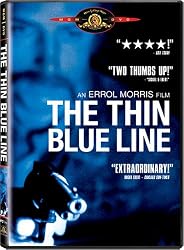
The Thin Blue Line (1988) Review

The Thin Blue Line (1988)
Average Reviews:

(More customer reviews)
This is an extraordinary documentary in which film maker Errol Morris shows how an innocent man was convicted of murdering a policeman while the real murderer was let off scot free by the incompetent criminal justice system of Dallas, Texas. The amazing thing is that Morris demonstrates this gross miscarriage of justice in an utterly convincing manner simply by interviewing the participants. True, he reenacts the crime scene and flashes headlines from the newspaper stories to guide us, but it is simply the spoken words of the real murderer, especially in the cold-blooded, explosive audio tape that ends the film, that demonstrate not only his guilt but his psychopathic personality. And it is the spoken words of the defense attorneys, the rather substantial Edith James and the withdrawing Dennis White, and the wrongfully convicted Randall Adams that demonstrate the corrupt and incompetent methods used by the Dallas Country justice system to bring about this false conviction. Particularly chilling were the words of Judge Don Metcalfe, waxing teary-eyed, as he recalls listening to the prosecutor's summation about how society is made safe by that "thin blue line" of cops who give their lives to protect us from criminals. The chilling part is that while he is indulging his emotions he is allowing the cop killer to go free and helping to convict an innocent man. Almost as chilling in its revelation of just how perverted and corrupt the system has become, was the report of how a paid psychologist, as a means of justifying the death penalty, "interviewed" innocent Randall Adams for fifteen minutes and found him to be a danger to society, a blood-thirsty killer who would kill again.
This film will get your dander up. How the cops were so blind as to not see that 16-year-old David Harris was a dangerous, remorseless psychopath from the very beginning is beyond belief. He even took a delight in bragging about his crime. As Morris suggests, it was their desire to revenge the cop killing with the death penalty that blinded them to the obvious. They would rather fry an innocent man than convict the real murderer, who because of his age was not subject to the death penalty under Texas law. When an innocent man is wrongly convicted of a murder three things happen that are disastrous: One, an innocent man is in jail or even executed. Two, the real guilty party is free to kill again. And, three, the justice system is perverted. This last consequence is perhaps the worst. When people see their police, their courts, their judges condemning the innocent and letting the guilty walk free, they lose faith in the system and they begin to identify with those outside the system. They no longer trust the cops or the courts. The people become estranged from the system and the system becomes estranged from the people. This is the beginning of the breakdown of society. The Dallas cops and prosecutors and the stupid judge (David Metcalfe), who should have seen through the travesty, are to be blamed for the fact that David Harris, after he testified for the prosecution and was set free, did indeed kill again, as well as commit a number of other crimes of violence.
The beautiful thing about this film is, over and above the brilliance of its artistic construction, is that its message was so clear and so powerful that it led to the freeing of the innocent Randall Adams. Although the psychopathic David Harris, to my knowledge, was never tried for the crime he committed, he is in prison for other crimes and, it is hoped, will be there for the rest of his life. Errol Morris and the other people who made this fine film can pride in these facts and in knowing that they did a job that the Dallas criminal justice system was unable to do.

Click Here to see more reviews about: The Thin Blue Line (1988)

Academy AwardÂ(r)-winner* Errol Morris broke new ground with the "riveting" (LA Weekly) film that dramatically reenacts the crime scene and investigation of a police officer's murder in Dallas. So powerful and convincing that it helped free an innocent man from prison, The Thin Blue Line is "one of the finest documentary features ever made" (Boxoffice).On November 28, 1976, when drifter Randall Dale Adams was picked up by teenage runaway David Harris, his fate was sealed. That night, a police officer was shot in cold blood. And though all the facts pointed to Harris, a sociopath with a lengthy rap sheet, Adams was convicted of capital murder. Was Adamsguilty? And if not, can Morris unlock the secrets of this baffling case?*2003: Documentary Feature, The Fog of War (with Michael Williams)

Buy Now

Click here for more information about The Thin Blue Line (1988)

Monday, December 26, 2011

Guns, Germs, and Steel (2005) Review

Guns, Germs, and Steel (2005)
Average Reviews:

(More customer reviews)
First, if you taped this documentary off of PBS, keep your tape as the "extras" here are little more than a few facts spiffed up graphically over a world map.
Diamond's thesis in "Guns, Germs, and Steel" is that geography, which governs climate which, in turn, governs indigenous species, is the reason for the unequal distribution of wealth in the world today. In short, Diamond is focused on why the Europeans conquered so much of the world.
There are 3 one-hour episodes in this series. The first is concerned with why agriculture took hold in parts of the world and hints at the benefits it bestowed in developing large, complex societies. The second episode is concerned with how these large complex (European) societies were able to develop weapons (guns and steel) to conquer much of the rest of the world. Germs were an unintended weapon against indigenous people that may have been the most beneficial. The last installment is concerned with another way to test the "guns, germs, and steel" hypothesis using the European march into Africa as test material. Here, climate (created by geography) creates indigenous germs that the Europeans can't handle. Nevertheless, guns and steel (apparently) still win the day.
This documentary is a reasonable, though somewhat superficial, overview of Diamond's thesis. The problem is, however, that it is somewhat glib and fails to get to the "Ken Burns" gold standard. There is much repetition of the "guns, germs, and steel" theme from episode to episode so that, even within the 3 hours, there should have been room to hint at some speculation on simple questions that the thesis itself invites. For example, there is essentially no mention of China (except the standard reference to gunpowder being developed there). If China had a complex civilization, why did they end up in isolation? It is never mentioned, for example, *why* the Chinese, having developed gunpowder never used it in conquest. (The neglect of China is particularly interesting as Diamond does deal with some of these issues in his book.) Another example is the tropic climate theme: the Americas had a tropical climate as well, complete with tropical germs and yet that did not slow the spread of European conquests there. Finally, geography is presented on a primarily 2-dimensional world map scale, not accounting for crucial issues like climate changes at altitude or rapid transportation as a result of internal rivers within a continent.
Lastly, while this is really Diamond's show, it would have been valuable to have a few scholarly, dissenting opinions on why Diamond's theories haven't been universally embraced. As it is, the documentary presents the "guns, germs, and steel" theory so forcefully, one is left to wonder why it took 30 years for someone as smart as Diamond to come up with a set of seemingly simple ideas. The elegance of Diamond's theory is precisely because it shows how simple issues relate to the complexities of human history, but the documentary completely neglects competing ideas in this arena (and there are many).
It's nice that National Geographic is introducing these provocative ideas to the public at large, it's just a shame that such weighty material didn't produce a deeper program.

Click Here to see more reviews about: Guns, Germs, and Steel (2005)

Based on the Pulitzer Prize-winning book and national best seller, Guns, Germs, and Steel is an epic detective story that offers a gripping expose on why the world is so unequal. Professor Jared Diamond traveled the globe for over 30 years trying to answer the biggest question of world history. Why is the world so unequal? The answers he found were simple yet extraordinary. Our destiny depends on geography and access to: Guns, Germs, and Steel. Weaving together anthropology and science with epic historical reenactments, Guns, Germs, and Steel brings Diamond's fascinating theories to life, and moves beyond the book to bring his ideas into the present day.

Buy NowGet 26% OFF

Click here for more information about Guns, Germs, and Steel (2005)

Monday, October 10, 2011

A Crude Awakening - The Oil Crash (2007) Review

A Crude Awakening - The Oil Crash (2007)
Average Reviews:

(More customer reviews)
I've bought and read most of the major "peak oil" books that have been published the last few years, and so I didn't expect that much from this film when I ordered it using my Neflix subscription (now I'm buying a copy here on Amazon, for a mere $19.99).
Boy, was I ever surprised when I viewed it today! This documentary is so well done, that I really feel it should be required viewing in all high schools and colleges, and I wish everyone in this country could in fact see it.
Virtually all of the major energy experts, most of whom have written books on Peak Oil, are interviewed in this film, with a multitude of scores of video clips from the past and present, including an interview from the 1970's, with M. King Hubbert (the originator of Hubbert's Peak).
This film shows the power of video documentaries, when they are produced with style, creativity and true expertise. Just about every conceivable concept related to the world's energy use, past, present and future, along with great comments regarding the various alternative possibilities (solar, wind, nuclear, hydrogen, etc.), are illustrated here.
Five stars without any doubt!

Click Here to see more reviews about: A Crude Awakening - The Oil Crash (2007)

An unforgettable and shocking wake-up call, A CRUDE AWAKENING offers the rock-solid argument that the era of cheap oil is in the past. Relentless and clear-eyed, this intensively-researched film drills deep into the uncomfortable realities of a world that is both addicted to fossil fuels and blissfully unaware of the looming "peak oil" crisis. Drawing on an international cast of maverick energy experts and thinkers, directors Basil Gelpke and Ray McCormack debunk the conventional wisdom that oil production will continue to climb, and instead stare bleakly at a planet facing economic meltdown and conflict over its most valuable resource. Featuring a haunting score by Phillip Glass and a fascinating array of rare archival footage, the film explores oil's rocky relationship with human progress in locales ranging from ancient Baku, Azerbaijan to dusty oilpatch town McCamey, Texas. Amidst a dark and disturbing vision of our future, A CRUDE AWAKENING hints at a humbler way of life built around sustainability and alternative energy, providing a visually stunning, boldly prophetic testament which provokes not just thought but action.Q&A with Basil Gelpke 1.What inspired you to make this film?I thought it was the most underreported burning issue at the time when we embarked on the project back in 2005.2.What kind of response have you encountered from audiences who’ve seen it?We’ve got a lot of feedback: Either people would deny our conclusion or they would see the film as an eye-opener.3.What, if anything, do you think has changed since you made the film about the oil situation?The current financial crisis has lowered the overall consumption but it’s interesting to see that not very much as oil consumption is so vital to our societies. While demand goes down in the US it’s still increasing in places like China.4.Do you feel that the high price of gas last year and the current economic crisis has changed our oil addiction?Yes, and I think there’s a growing consensus that we have to change our dependence on imported energy and now there’s a remarkable push to look for alternative sources of energy.5.How much do you think things have changed now that there is a new administration in the White House?The Obama administration is definitely very aware of the issue and they have taken lots of promising steps to change our addiction to oil and fossil fuels in general. Whether they’ll be successful remains to be seen but it’s certainly going into the right direction.6.Can you discuss your decision to use animation and archival footage that sings the praises of oil?It seemed a good way to show how perceptions change over time and how we’re all conditioned by history.7.The score by Philip Glass is remarkable. What made you choose him for the film?Yes, we love his work too!8.Faced with the alarming future shown in the film, what, if any, is your hope for curing our addiction to oil?There’s always hope. However, I strongly believe that when the financial crisis has subsided there will be a next crisis caused by nature: The dwindling resources of the planet simply can’t satisfy the ever increasing demand arising from a growing population. So over time we’ll have to rethink our way of life.

Buy NowGet 52% OFF

Click here for more information about A Crude Awakening - The Oil Crash (2007)

Thursday, June 9, 2011

An Evening With Kevin Smith (2002) Review

An Evening With Kevin Smith (2002)
Average Reviews:

(More customer reviews)
Kevin Smith is the director behind five of my favorite movies. Clerks, Mallrats, Chasing Amy, Dogma and Jay & Silent Bob Strike Back were all created as a part of Kevin's "New Jersey Chronicles," in which each of the afformentioned movies had recurring characters from the previous films. Each film is laced with witty dialogue and even some serious messages mixed in.
On this DVD, Kevin talks about anything and everything ranging from the failed documentary with Prince to a soft-core porn involving Jason Mewes, who is known to all as Jay in the "New Jersey" movies. Kevin's most interesting topic was the controversey surrounding "Dogma." Kevin talks about the death threats he recieved, his Catholic up-bringing and about the time he picketted at his own movie. However, nothing is as amusing as the story behind his failed attempt to revive the Superman movie franchise. Kevin talks about his meetings with Warner Bros. executives and the producer at the time who had some unusual requests as to what he wanted included in the script.
All and all, if you are a fan of the Kevin Smith movies, you owe it to yourself to pick up a copy of this DVD. If you have not seen any of Kevin's movies, you owe it to yourself to buy every single one of them and then to buy this.

Click Here to see more reviews about: An Evening With Kevin Smith (2002)

No Description Available.Genre: Feature Film-ComedyRating: NRRelease Date: 5-JUN-2007Media Type: DVD

Buy Now

Click here for more information about An Evening With Kevin Smith (2002)