Showing posts with label environmentalis m. Show all posts

Tuesday, January 22, 2013

King Corn (Green Packaging) Review

King Corn (Green Packaging)
Average Reviews:

(More customer reviews)
King Corn is kind of like Super Size Me's little brother. It traces the pervasive influence of corn on modern America, including the obesity epidemic and the fact that Iowa is growing trillions of bushels of *non-edible* corn to continue receiving lucrative government subsidies. College buddies Ian and Curt, both from the east coast, discover that they both had distant relatives from the same small town of Greene, Iowa. Ian and Curt decide to go to Iowa and plant one acre of corn, following it through its lifecycle, including where it goes after the harvest.
The film starts off slowly as the reasons for the trip are explained. The prerequisite talking heads introduce some scary factoids about how Americans are literally made of corn; if you do a hair analysis, it's like a diet diary, and the vast majority of the American diet (corn-fed beef, fast foods and processed foods) contains corn derivatives. Much of the corn we ingest is in the guise of high fructose corn syrup (HFCS), a cheaper alternative to sugar that is produced via a scary chemical conversion involving several toxic acids. HFCS has been directly linked to the current obesity crisis and its impact on Type II Diabetes (the body processes HFCS differently from table sugar). Prior to the 1970s, hardly any company used HFCS due to its high cost. But after then-Secretary of Agriculture Earl Butz did away with the old New Deal market control policies in favor of rapid expansion in 1973, there was a constant surplus of cheap (and non-edible) corn, fueling the rapid expansion of the corn syrup industry. Here's a quick test: walk into any convenience store and count how many items contain corn, specifically corn syrup. The list includes obvious choices like soda and candy, but you'll also find HFCS in deli meats, breads, ketchup, pickle relish, spaghetti sauce, and cough syrup. Oh yes, and one main variety of corn grown in Iowa (Liberty) is genetically modified, as is at least one ingredient in HFCS manufacturing.
Corn production geared towards ethanol is briefly mentioned, but the majority of the focus in King Corn is on the impact of non-edible corn on the nation's food supply. In this respect, it's kind of a gentler version of Supersize Me; there's no shock value for the most part. Also mentioned is the disastrous consequence of converting cattle from grazing animals to force-fed confined ones. Cattle normally forage for a plant-based diet, but it is far more profitable to bring them up to market weight by forcing them to stand still and eat continuously. In addition, the acids present in corn cause deadly ulcers for the cows, who are slaughtered before developing acidosis. The end result is that 70% of the antibiotics in the US are used on livestock (antibiotics combat both the acidosis and the infections resulting from confinement). Literally everything at McDonald's contains corn: your hamburger is corn-fed, the bun contains HFCS, your soda contains HFCS, the French fries are fried in corn (or soybean) oil, and your ketchup and pickle contains HFCS. Ditto for most vending machine foods, frozen dinners, and anything you don't make from scratch. It's extremely difficult to escape buying foods containing corn, since a variety of pseudonyms are used, including baking powder, caramel color, dextrose, hydrolyzed vegetable protein, stearic acid, and vanilla, making it a nightmare for anyone with corn allergies.
Perhaps the most effective element is that of nostalgia. Ian and Curt also take time to find their long-lost relatives in Greene, and to reflect on the rapid changes in our recently agrarian society that have forced farmers to maintain massive farms harvesting non-edible corn. In other words, the farmer can't even feed himself with what he's growing. Without the hefty government subsidies, such large-scale corn operations would be out of business. They interview various farmers and ranchers who are disgusted with the system, but who have little real choice (one farmer says flatly, "We're growing crap!"). We're shown the evolution of farming equipment and of the family farm itself as a quaint reminder of the past; there are nostalgic shots of Main Street and hometown parades, quiet diners and local bars.
Ian and Curt's visual style is playful; the charts and graphs are hand-drawn, interspersed with stop-motion plastic farm toys to get the point across (and the dancing corn on the map of the US was great, too). The quirky soundtrack is a standout as well. DVD extras include some outtakes, a music video, bios, and some great 1950s-style educational clips. King Corn is a thought-provoking look at the old adage "You are what you eat," and boy, it's scary.

Click Here to see more reviews about: King Corn (Green Packaging)

KING CORN is a fun and crusading journey into the digestive tract of our fast food nation where one ultra-industrial, pesticide-laden, heavily-subsidized commodity dominates the food pyramid from top to bottom corn. Fueled by curiosity and a dash of naivete, college buddies Ian Cheney and Curt Ellis return to their ancestral home of Greene, Iowa to figure out how a modest kernel conquered America.With the help of some real farmers, oodles of fertilizer and government aide, and some genetically modified seeds, the friends manage to grow one acre of corn. Along the way, they unlock the hilarious absurdities and scary but hidden truths about America s modern food system in this engrossing and eye-opening documentary. A graceful and frequently humorous film that captures the idiosyncrasies of its characters and never hectors (Salon), KING CORN shows how and why whenever you eat a hamburger or drink a soda, you re really consuming ... corn.

Buy Now

Click here for more information about King Corn (Green Packaging)

Sunday, November 18, 2012

BBC Atlas of the Natural World - Wild South America Review

BBC Atlas of the Natural World - Wild South America
Average Reviews:

(More customer reviews)
As in my other review regarding this BBC Atlas of the Natural World, I will confirm this complete series has no peer - including the recent ' Planet Earth ' production !!
And I repeat ... those who have not viewed this shockingly remarkable group of DVDs have no idea of what they are missing !!
This review is focused on the complete set of this view into the natural world. The whole thing is unbelievably outstanding !!

Click Here to see more reviews about: BBC Atlas of the Natural World - Wild South America

WILD SOUTH AMERICA - DVD Movie

Buy NowGet 10% OFF

Click here for more information about BBC Atlas of the Natural World - Wild South America

Thursday, August 30, 2012

Sesame Street: Being Green (2009) Review

Sesame Street: Being Green (2009)
Average Reviews:

(More customer reviews)
I bought this DVD for my 2 1/2 year old cousin who adores Elmo and it was a great buy. The songs are very catchy and i cant help it but to sing along. We play it in the car, at home and every where we can. The video is very informative about "going green" but i think an older child would appreciate the message better.In addition to all of this, Elmo looks so adorable green!

Click Here to see more reviews about: Sesame Street: Being Green (2009)

Elmo and Abby find out it can be easy being green when they stumble onto the Earth-a-Thon, hosted by Mr. Earth (Paul Rudd), happening right on Sesame Street. Telly, Rosita, and Cookie Monster answer phone calls from children calling in with pledges to reduce, reuse, recycle (and possibly send cookies to Cookie). But what happens when Abby uses her magic to help Elmo be really "green"? This jam-packed DVD is filled with songs, ideas, and suggestions from real kids around the world!

Buy NowGet 33% OFF

Click here for more information about Sesame Street: Being Green (2009)

Sunday, August 12, 2012

Life After People (History Channel) Review

Life After People (History Channel)
Average Reviews:

(More customer reviews)
This show, along with the National Geographic Channel's Aftermath: Population Zero, both bring across the interesting concept of what life on Earth would be like after Humans disappear from the face of the earth, though in the case of both these shows there is no explanation of how we disappeared and only that it was basically overnight. In any case, this and its consort both propose an idea which I myself find intriguing in the one of the most terrifying ways. A must see as well as something I simply could not take my eyes away from while watching it.
This one by the History Channel shows more over a broader range of years since our disappearance, and for a few of the earlier ones compares them to current examples that exist (i.e. 20 years to the land around Chernobyl).
All else I can say is that this is a MUST SEE!

Click Here to see more reviews about: Life After People (History Channel)

If humans were suddenly to disappear, what would happen to our planet – the structures we've built, the everyday items we take for granted, domesticated and wild animals, plants, trees? What would become of the things that define our species and leave our mark on this Earth?
Visit the ghostly villages surrounding Chernobyl (abandoned by humans after the 1986 nuclear disaster), travel to remote islands off the coast of Maine to search for abandoned towns that have vanished from view in only a few decades, then head beneath the streets of New York to see how subway tunnels may become watery canals.

HISTORY® takes you on an amazing visual journey in Life After People, a though-provoking adventure that combines movie-quality visual effects with insights with insights from experts in the fields of engineering, botany, ecology, biology, geology, climatology, and archeology to demonstrate how the very landscape of our planet will change in our absence.


Buy NowGet 37% OFF

Click here for more information about Life After People (History Channel)

Thursday, March 1, 2012

180 South (2010) Review

180 South (2010)
Average Reviews:

(More customer reviews)
I have to outright reject the previous reviewer's 1-star rating. This was a great adventure film, that had me wishing I was right alongside with them. There is awesome scenery, great action sequences, humor, and a 'just for the hell of it' attitude that is very refreshing. Now, as for the ecological message - yes it gets a little heavy-handed and in the way of the movie. The message of over-consumption, and the ability to live in harmony with the land is a powerful and important one, and I give props to the filmmakers for tackling it, but they perhaps over-did it (time-wise). If you enjoy adventure books or movies, you will enjoy this, and it is DEFINITELY worth seeing!

Click Here to see more reviews about: 180 South (2010)

180° SOUTH: CONQUERORS OF THE USELESS follows Jeff Johnson as he retracesthe epic 1968 journey of his heroes Yvon Chouinard and Doug Tompkins to Patagonia. Along the way he gets shipwrecked off Easter Island, surfs the longest wave of his life - and prepares himself for a rare ascent of Cerro Corcovado. Jeff's life takes a turn when he meets up in a rainy hut with Chouinard and Tompkins who, once driven purely by a love of climbing and surfing, now value above all the experience of raw nature - and have come to Patagonia to spend their fortunes to protect it.

Buy NowGet 28% OFF

Click here for more information about 180 South (2010)

Monday, December 12, 2011

Who Killed the Electric Car? (2006) Review

Who Killed the Electric Car (2006)
Average Reviews:

(More customer reviews)
A great film about another sorry episode in the history of America's automobile and energy industry. Set as a "Who-Done-It", the film chronicles how short sighted automakers (especially GM) develop great electric cars in response to the California ZEV mandate only to do everything in their power - from suing the state, making ridiculous ads, creating a red-tape filled lease application process - to kill them. Consumers buy bigger and bigger vehicles (whether they need them or not). Government officials and staffers bow to the pressure of intense lobbying, and conflicts of interest. The sad fate of most of the EVs produced during the late '90s to 2002 is revealed.
GM, especially, comes off as incredibly vindictive. What automaker ever tracked down every car of any model and crushed them (not the Corvair, Edsel, etc.)? Even after loyal drivers pleaded to keep them, offering to buy the last remaining EV1s with junk titles at lease buyout prices, GM went out of its way to ensure that the EV1 was history.
The passion of GM's EV specialist Chelsea Sexton for the EV1 makes her the star of the movie. One can only imagine what the engineers who designed the EV1 felt when their babies were being crushed.
But the movie ends on a hopeful note. We may never see the EV1 again, but vehicles using electric drive systems, either as full EVs (which are coming from several start-up companies) or plug-in hybrids, must inevitably roam the roads. The upward trend in gasoline prices, the effects of global warming, the inherent efficiency of electric drive trains, the continued improvement of battery technology, and the upcoming reevaluation of the ZEV Mandate guarantee it.

Click Here to see more reviews about: Who Killed the Electric Car (2006)

In 1996, electric cars began to appear on roads all over California. They were quiet and fast, produced no exhaust and ran without gasoline. Ten years later, these futuristic cars were almost entirely gone. What happened? Why should we be haunted by the ghost of the electric car?

Buy NowGet 50% OFF

Click here for more information about Who Killed the Electric Car (2006)

Monday, October 10, 2011

A Crude Awakening - The Oil Crash (2007) Review

A Crude Awakening - The Oil Crash (2007)
Average Reviews:

(More customer reviews)
I've bought and read most of the major "peak oil" books that have been published the last few years, and so I didn't expect that much from this film when I ordered it using my Neflix subscription (now I'm buying a copy here on Amazon, for a mere $19.99).
Boy, was I ever surprised when I viewed it today! This documentary is so well done, that I really feel it should be required viewing in all high schools and colleges, and I wish everyone in this country could in fact see it.
Virtually all of the major energy experts, most of whom have written books on Peak Oil, are interviewed in this film, with a multitude of scores of video clips from the past and present, including an interview from the 1970's, with M. King Hubbert (the originator of Hubbert's Peak).
This film shows the power of video documentaries, when they are produced with style, creativity and true expertise. Just about every conceivable concept related to the world's energy use, past, present and future, along with great comments regarding the various alternative possibilities (solar, wind, nuclear, hydrogen, etc.), are illustrated here.
Five stars without any doubt!

Click Here to see more reviews about: A Crude Awakening - The Oil Crash (2007)

An unforgettable and shocking wake-up call, A CRUDE AWAKENING offers the rock-solid argument that the era of cheap oil is in the past. Relentless and clear-eyed, this intensively-researched film drills deep into the uncomfortable realities of a world that is both addicted to fossil fuels and blissfully unaware of the looming "peak oil" crisis. Drawing on an international cast of maverick energy experts and thinkers, directors Basil Gelpke and Ray McCormack debunk the conventional wisdom that oil production will continue to climb, and instead stare bleakly at a planet facing economic meltdown and conflict over its most valuable resource. Featuring a haunting score by Phillip Glass and a fascinating array of rare archival footage, the film explores oil's rocky relationship with human progress in locales ranging from ancient Baku, Azerbaijan to dusty oilpatch town McCamey, Texas. Amidst a dark and disturbing vision of our future, A CRUDE AWAKENING hints at a humbler way of life built around sustainability and alternative energy, providing a visually stunning, boldly prophetic testament which provokes not just thought but action.Q&A with Basil Gelpke 1.What inspired you to make this film?I thought it was the most underreported burning issue at the time when we embarked on the project back in 2005.2.What kind of response have you encountered from audiences who’ve seen it?We’ve got a lot of feedback: Either people would deny our conclusion or they would see the film as an eye-opener.3.What, if anything, do you think has changed since you made the film about the oil situation?The current financial crisis has lowered the overall consumption but it’s interesting to see that not very much as oil consumption is so vital to our societies. While demand goes down in the US it’s still increasing in places like China.4.Do you feel that the high price of gas last year and the current economic crisis has changed our oil addiction?Yes, and I think there’s a growing consensus that we have to change our dependence on imported energy and now there’s a remarkable push to look for alternative sources of energy.5.How much do you think things have changed now that there is a new administration in the White House?The Obama administration is definitely very aware of the issue and they have taken lots of promising steps to change our addiction to oil and fossil fuels in general. Whether they’ll be successful remains to be seen but it’s certainly going into the right direction.6.Can you discuss your decision to use animation and archival footage that sings the praises of oil?It seemed a good way to show how perceptions change over time and how we’re all conditioned by history.7.The score by Philip Glass is remarkable. What made you choose him for the film?Yes, we love his work too!8.Faced with the alarming future shown in the film, what, if any, is your hope for curing our addiction to oil?There’s always hope. However, I strongly believe that when the financial crisis has subsided there will be a next crisis caused by nature: The dwindling resources of the planet simply can’t satisfy the ever increasing demand arising from a growing population. So over time we’ll have to rethink our way of life.

Buy NowGet 52% OFF

Click here for more information about A Crude Awakening - The Oil Crash (2007)

Saturday, August 27, 2011

An Inconvenient Truth Review

An Inconvenient Truth
Average Reviews:

(More customer reviews)
Ok, let me get this straight. They made a documentary about Al Gore giving a lecture? About global warming? Okay, I'm already asleep. Snore. Yawn. Why don't I just stay home and save the money I would spend to take a nap.
All kidding aside, if you know anything about Al Gore, you know this is a subject he is extremely committed to and passionate about. Very passionate. And after five years of some of the worst, most harmful environmental policy to ever come out of Washington, DC, there is no better time for "An Inconvenient Truth".
I know many consider Gore to be less than a captivating speaker. But in "An Inconvenient Truth" he comes across as a different man because he is so passionate and committed to the subject of global warming, he comes across as a different man. Informed, knowledgeable, conversational and persuasive, if he were like this during the election, there would be no Florida Recount in our history books. Okay, so that didn't happen. But the result is that Gore, much like Clinton and Carter, are trying to do something with their status to help better the world. Gore has long been an environmental advocate and it shows. He knows the facts inside and out; people have provided him with statistics, graphs, charts and more, and he uses them in this presentation.
As Gore states, he has given the lecture more than a thousand times around the globe. Because of this, he is extremely comfortable addressing large audiences, giving them a lot of scientific research to digest. Remarkably, he makes it easy to understand, pointing out key facts, walking us through some of the more difficult to understand ideas and problems. He also knows when the audience needs a break and interjects humor here and there. At one point, he shows a spoof of an educational film animated by the people at "The Simpsons". At others, he makes fun of himself and his political ambitions and woes.
Davis Guggenheim, the filmmaker, has apparently presented Gore's lecture virtually intact. As Gore moves around on a dais, clicking for the next slide, he makes persuasive points. But he also reaches a couple of key points. When this happens, the filmmakers smartly pull back from the lecture, giving us a portrait of a few key moments in Gore's life. The argument he makes in his lecture is persuasive, intelligent and well thought out, but because we learn more about the man making the presentation, these points have even more resonance. Not only do these moments give us more details about Gore, they also provide a respite from the scientific data, allowing us to absorb what we have learned.
At one point, Gore states that the data is irrefutable and it appears to be. Remarkably, the filmmakers show footage of various people attacking Gore, or claiming the data he is presenting is not based in fact. Yet, we can see it for ourselves, right in front of us. And I am sure Gore could easily provide a bibliography of resources for us to check out all of the facts he uses. What would drive some of these people to attack Gore and this data? Some of the clips are from Gore's days as a Senator and Vice President, so some of that can be contributed to political parties trying to one-up each other. But currently, Gore does not hold political office, yet the current administration seems intent on giving every break to the worst polluters in the country, allowing them to make as much money as possible while they pollute and pollute and pollute. Gore shows a slide about this argument. Apparently, there is the thought good environmental policy will impact the economy. How do these same people explain the relationship between Toyota, Honda, Ford and GM? Toyota and Honda manufacture vehicles with far better gas mileage than their competitors and are much more successful because of it. An argument Gore makes very convincingly.
Thankfully, Gore stays away from political bias. More or less. A couple of times, he makes funny remarks about his failed run for the presidency, or he makes a pointed comment about the current administration, but by and large his comments are directed at us and what we should do to save our planet. The film isn't void of bias, but there could certainly have been a lot more. The fact the filmmaker and Gore showed some restraint makes his presentation even more persuasive.
The film ends with a series of `calls to action' as the credits begin. Frankly, these aren't needed because Gore's arguments are so convincing. But they are effective. As one call to action states "Urge everyone you know to see this film." Well, folks, that's what I am doing. Go and see this film. We need to do something before it is too late to do anything. Hopefully, this film will one day be viewed as a historical document of the beginning of a great change and not as a horror film.

Click Here to see more reviews about: An Inconvenient Truth

Director Davis Guggenheim eloquently weaves the science of global warming with Al Gore's personal history and lifelong commitment to reversing the effects of global climate change in the most talked-about documentary of the year.An audience and critical favorite, An Inconvenient Truth makes the compelling case that global warming is real, man-made, and its effects will be cataclysmic if we don’t act now.Gore presents a wide array of facts and information in a thoughtful and compelling way: often humorous, frequently emotional, always fascinating.In the end, An Inconvenient Truth accomplishes what all great films should: it leaves the viewer shaken, involved and inspired.

Buy NowGet 60% OFF

Click here for more information about An Inconvenient Truth

Saturday, August 13, 2011

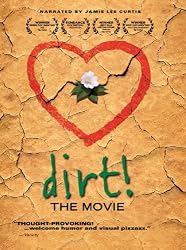
Dirt The Movie (2009) Review

Dirt The Movie (2009)
Average Reviews:

(More customer reviews)
I saw this film during Docuweeks in Los Angeles about a year ago. It inspired me beyond words, into action.
I found this film to have a broad range of views on varying topics having to do with dirt: natural building, tree planting, edible schoolyards (and after watching Jamie Oliver's Food Revolution, I am convinced that EVERY school needs a garden program!), mountaintop removal, mycology, energy, food, water, farming, composting, gardening....
I have since seen this film NUMEROUS times and I highly recommend it. While it does touch on some serious topics, it is not a heavy documentary that requires a barf bag (thanks, Cove) or a prescription for Lexapro. It is informative, general, entertaining and inspiring. AND it has a great soundtrack from KCRW's highly acclaimed Tom Schnabel.

Click Here to see more reviews about: Dirt The Movie (2009)

DIRT! THE MOVIE is an astonishing, humorous and substantial look at the glorious and unappreciated ground beneath our feet. Dirt feeds us and gives us shelter. Dirt holds and cleans our water. Dirt heals us and makes us beautiful. Dirt regulates the earth s climate. Why do we humans ignore, abuse, and destroy our most precious living natural resource? Consider the results of such behavior: Mass starvation, drought, floods and global warming. Narrated by Jamie Lee Curtis, DIRT! THE MOVIE tells the story of humans trying to re-connect to dirt the living skin of the earth. Traveling from the vineyards of California to the plains of Kenya, DIRT! reveals how repairing our relationship with dirt can create new possibilities for all life on earth.

Buy NowGet 54% OFF

Click here for more information about Dirt The Movie (2009)

Friday, May 13, 2011

Avatar (Three-Disc Extended Collector's Edition) (2009) Review

Avatar (Three-Disc Extended Collector's Edition) (2009)
Average Reviews:

(More customer reviews)
I'm primarily interested in the storyline differences between special sets and their theatrical counterparts, so here are the differences between the two (NOTE: SPOILERS FOLLOW).
The extended collector's edition runs 16 minutes 28 seconds longer than the theatrical cut, and listed below are the major differences.
1) The opening scene is different, and starts with Jake in a wheelchair on Earth, in a Blade Runner-esque Earth city. The scene moves to scenes of Jake in his apartment, then taking liquid shots in a bar. Jake's narration of "I told myself I can pass any test a man can pass" and "They can fix the spinal if you got the money. But not on vet benefits, not in this economy" are inserted during this new opening scene.
Jake beats up a bar patron who is mistreating a woman, and then Jake and wheelchair are unceremoniously thrown outside by bouncers into an alley. While in the alley, Jake meets the two RDA representatives who bring him news of his brother's untimely death. Then the movie cuts back to the original theatrical cut where Jake sees his brother's body cremated, then awakes in space.
2) During Jake's initial flyover of Pandora in his avatar, they witness a herd of Sturmbeasts, buffalo-like creatures.
3) After seeing the Sturmbeasts, Grace, Jake, and Norm stop by Grace's old English school for the Na'vi. The school is now closed, abandoned, and some walls are riddled with bullet-holes. Norm finds a Dr. Seuss book, "The Lorax", on the ground. This scene explains how Neytiri knew English so well, and certainly gives some further backstory into Grace Augustine's character.
Interestingly, The Lorax can be seen as a metaphor for the Pandoran story. Recall that the seemingly simple Seussian book is actually a lesson on the plight of the environment and industrialization.
4) We see some other different Pandoran flora and fauna, particularly with scenes of the luminescent forest floor.
5) Jake's first dinner with Neytiri is longer and extended, and it's here that she tells him her full name.
6) When Jake, Grace, and Norm first visit the Hallelujah Mountains on the way to the remote uplink station, Grace explains (in a Jake voiceover) that the mountains are levitated [via the Meissner Effect], because Unobtanium is a superconductor. There's a pretty spectacular CGI shot as the characters look around in awe at the suspended mountains.
7) Pictures of Grace and Na'vi children at her previously functioning school. Dr. Augustine tells Jake that she previously taught Neytiri and her sister, Sylwanin. However, one day, Sylwanin and some hunters destroyed an RDA bulldozer, and RDA SecOps troopers killed them at the school, which explains why the school walls were previously seen pockmarked with bullet holes.
8) Sturmbeast hunting scene after Jake tames a Banshee. After Jake successfully kills a Sturmbeast with an arrow, he and Neytiri chortle a "Heck yeah!" and whoop.
9) Jake and Neytiri's love scene comprises them linking braids together. Some kissing, nothing explicit.
10) Tsu'tey leads a war party that destroys the RDA's autonomous bulldozers, as well as the RDA SecOps squad that was guarding them. Corporal Wainfleet leads the search party that uncovers the evidence, via real-time helmet cam footage. Not sure why they cut this scene from the theatrical cut, as it persuades Selfridge to attack the Home Tree.
11) Attack of Hammerhead Titanotheres on RDA forces has been extended slightly; additional scenes of AMP-Suits getting destroyed.
12) Fight between Colonel Quaritch in AMP Suit and Neytiri on Thanator slightly longer.
13) Tsu'tey's death scene; in the theatrical cut, he falls off the RDA shuttle's aft ramp to his death. In the Collector's Edition, he falls to the forest floor, mortally wounded. He passes on leadership to Jake, and asks Jake to ceremonially kill him e.g. hara-kiri, so that Jake will be the last shadow that Tsu-Tey sees. Jake does so.
I preferred the original Tsu'tey death scene, which was more dramatic. Jake, had afterall, already become the de facto clan leader by that point in the movie, so further formal transfer by Tsu'tey (a minor character) seemed unnecessary.

Click Here to see more reviews about: Avatar (Three-Disc Extended Collector's Edition) (2009)

Experience the spectacular world of James Cameron's Avatar as never before with this all-new three-disc extended collector’s edition. The journey begins with three movie versions: the original theatrical release, the special edition re-release, and the exclusive extended cut not shown in theaters. The set's bonus feature run more than three hours and include over 45 minutes of deleted scenes and a feature-length documentary on the film's groundbreaking production. The greatest adventure of all time just got bigger and better.Versions of Avatar on Blu-ray and DVD
Contents of the DVD Extended Collector's EditionReview of the Original Theatrical EditionHere's what we had to say about the original theatrical edition of Avatar after seeing it on the big screen:After 12 years of thinking about it (and waiting for movie technology to catch up with his visions), James Cameron followed up his unsinkable Titanic with Avatar, a sci-fi epic meant to trump all previous sci-fi epics. Set in the future on a distant planet, Avatar spins a simple little parable about greedy colonizers (that would be mankind) messing up the lush tribal world of Pandora. A paraplegic Marine named Jake (Sam Worthington) acts through a 9-foot-tall avatar that allows him to roam the planet and pass as one of the Na'vi, the blue-skinned, large-eyed native people who would very much like to live their peaceful lives without the interference of the visitors. Although he's supposed to be gathering intel for the badass general (Stephen Lang) who'd like to lay waste to the planet and its inhabitants, Jake naturally begins to take a liking to the Na'vi, especially the feisty Neytiri (Zoë Saldana, whose entire performance, recorded by Cameron's complicated motion-capture system, exists as a digitally rendered Na'vi). The movie uses state-of-the-art 3D technology to plunge the viewer deep into Cameron's crazy toy box of planetary ecosystems and high-tech machinery. Maybe it's the fact that Cameron seems torn between his two loves--awesome destructive gizmos and flower-power message mongering--that makes Avatar's pursuit of its point ultimately uncertain. That, and the fact that Cameron's dialogue continues to clunk badly. If you're won over by the movie's trippy new world, the characters will be forgivable as broad, useful archetypes rather than standard-issue stereotypes, and you might be able to overlook the unsurprising central plot. (The overextended "take that, Michael Bay" final battle sequences could tax even Cameron enthusiasts, however.) It doesn't measure up to the hype (what could?) yet Avatar frequently hits a giddy delirium all its own. The film itself is our Pandora, a sensation-saturated universe only the movies could create. --Robert Horton

Buy NowGet 30% OFF

Click here for more information about Avatar (Three-Disc Extended Collector's Edition) (2009)

Friday, April 22, 2011

Edge of Darkness (2009) Review

Edge of Darkness (2009)
Average Reviews:

(More customer reviews)
"Edge of Darkness was a sensation when it first aired on British television in 1985. Aired on PBS in the United States, it was a dark, brooding thriller that seemed destined for a big-screen version that would be found lacking in ways big and small. However, Mel Gibson's 2010 version of the story still provides a lot of the sadness, bitterness, and intrigue with some changes that while they do necessarily improve the story, they don't damage it, either.
Gibson plays Tom Craven (played as Ron Craven by Bob Peck in the original), a widowed Boston Homicide detective eagerly awaiting the visit of his only child Emma, who works for a research facility, Northmoor. Soon into the visit, Craven sees that his daughter is very ill. Just as he is taking her to the hospital, she is shot and killed. Being a police officer, Craven immediately assumes that the bullet was meant for him, but upon investigating further, he soon learns that she was involved in the illegal entry of Northmoor by a protest group looking for evidence of wrongdoing by the corporation. A conspiracy begins to surround Craven that includes Northmoor, a US senator, and a shadowy government fixer named Jedburgh, played by Roy Winstone.
Gibson is always in his element in revenge thrillers, and Edge of Darkness is no exception. His tears, anger, rage, and righteous indignation strike the right notes at the right time, and he is ably supported by an excellent script and solid supporting cast. Again, a few details have been changed, but the general story remains bleak with perhaps a little more Hollywood hope and optimism added for good measure.

Click Here to see more reviews about: Edge of Darkness (2009)

The bullet that killed his daughter was meant for Boston cop Thomas Craven. That’s what police brass and Craven himself think, but that’s not what the investigation finds. Clue after clue and witness after witness, the search leads him into a shadowy realm where money and political intrigue intersect. If Craven wasn’t a target before, he--and anyone linked to his inquiry--now is. Mel Gibson stars in his first screen lead in eight years, making Craven’s grief palpable and his quest for payback stone-cold and relentless. Martin Campbell (Casino Royale) directs from a screenplay co-written by The Departed’s William Monahan. Gibson is back, taking us to the edge…and into the sinister darkness.

Buy NowGet 45% OFF

Click here for more information about Edge of Darkness (2009)

Tuesday, March 1, 2011

Food, Inc. (2008) Review

Food, Inc. (2008)
Average Reviews:

(More customer reviews)
"Food, Inc." does more than serve as an exposé on the United States food industry--it connects the dots between the nefarious, contemptuous business practices of multinational corporations and their best friends, the compromised government regulatory agencies such as the USDA, FDA, and EPA, who have in the past been led by folks well connected within the very industries they are supposed to regulate.
But let's hold on a minute. Filmmaker Robert Kenner's documentary could have been just a dour, paranoid investigative piece and still told the truth. Instead, Mr. Kenner has made a color, fast-paced, and well-documented account of the state of the food supply in our country; the unintended consequences of the efficiencies, short-cuts, and technological methods inherent in factory farming; the insidious insider relationship between the meat industry and the agencies that should be regulating it; and the health effects, including diabetes, of consuming processed foods and fast foods.
Naturally, the culprits behind the curtain (e.g., Smithfield, Monsanto, Perdue) would not appear on camera, not because they are cowards but precisely because they are so powerfully connected, and have legions of lawyers and enforcers (yes, like any bully, these outfits do use intimidation), and are moving to control free speech and criticism of their practices.
The counterbalance to the doom and gloom comes from interview with small farmers; with entrepreneurs in the organic food business; and with brave folks who have tried to make a stand against the food industry; and with those experts who are striving to be modern day Paul Reveres in the face of mass indifference.
Kenner uses photography and imagery to make his points, and he interlaces this film with scenes of amazing beauty and graphic cruelty. "Food, Inc." is not an easy film to watch, and it should not be. Kenner uses the final frames to deliver some to-do's for those who want to respond to the film not just in conversation but through action. As trite as it sounds, if you can only see one movie this year, go to this one. (When the negative review start cropping up for this movie, it would be interesting to see how many of those are from food industry insiders and their minions.)

Click Here to see more reviews about: Food, Inc. (2008)

Food, Inc. lifts the veil on our nation's food industry, exposing how our nation's food supply is now controlled by a handful of corporations that often put profit ahead of consumer health, thelivelihood of the American farmer, the safety of workers and our own environment. Food, Inc. reveals surprising and often shocking truths about what we eat, how it's produced and who we have become as a nation.Q&A with Producer/Director Robert Kenner, Co-Producer/Food Expert Eric Schlosser, Food Expert Michael Pollan and Producer Elise Pearlstein
How did this film initially come about?Kenner: Eric Schlosser and I had been wanting to do a documentary version of his book, Fast Food Nation. And, for one reason or another, it didn't happen. By the time Food, Inc. started to come together, we began talking and realized that all food has become like fast food, and all food is being created in the same manner as fast food.

How has fast food changed the food we buy at the supermarket?Schlosser: The enormous buying power of the fast food industry helped to transform the entire food production system of the United States. So even when you purchase food at the supermarket, you’re likely to be getting products that came from factories, feedlots and suppliers that emerged to serve the fast food chains.

How many years did it take to do this film and what were the challenges?Kenner: From when Eric and I began talking, about 6 or 7 years. The film itself about 2 ½ years. It has taken a lot longer than we expected because we were denied access to so many places.

Pearlstein: When Robby brought me into the project, he was adamant about wanting to hear all sides of the story, but it was nearly impossible to gain access onto industrial farms and into large food corporations. They just would not let us in. It felt like it would have been easier to penetrate the Pentagon than to get into a company that makes breakfast cereal. The legal challenges on this film were also unique. We found it necessary to consult with a first amendment lawyer throughout the entire filming process.

Who or what influenced your film?Kenner: This film was really influenced by Eric Schlosser and Fast Food Nation, but then as we were progressing and had actually gotten funding, it became very influenced as well by Michael Pollan and his book Omnivore’s Dilemma.

And then, as we went out into the world, we became really incredibly influenced by a lot of the farmers we met.

What was the most surprising thing you learned?Kenner: As we set out to find out how our food was made, I think the thing that really became most shocking is when we were talking to a woman, Barbara Kowalcyk, who had lost her son to eating a hamburger with E. coli, and she’s now dedicated her life to trying to make the food system safer. It’s the only way she can recover from the loss of her child. But when I asked her what she eats, she told me she couldn't tell me because she would be sued if she answered.

Or we see Carol possibly losing her chicken farm … or we see Moe, a seed cleaner who’s just being sued for amounts that there’s no way he can pay, even though he’s not guilty of anything. Then we realized there’s something going on out there that supersedes foods. Our rights are being denied in ways that I had never imagined. And it was scary and shocking. And that was my biggest surprise.

So, what does our current industrialized food system say about our values as a nation?Pollan: It says we value cheap, fast and easy when it comes to food like so many other things, and we have lost any connection to where our food comes from.

Kenner: I met a cattle rancher and he said, you know, we used to be scared of the Soviet Union or we used to think we were so much better than the Soviet Union because we had many places to buy things. And we had many choices. We thought if we were ever taken over, we’d be dominated where we’d have to buy one thing from one company, and how that’s not the American way. And he said you look around now, and there’s like one or two companies dominating everything in the food world. We’ve become what we were always terrified of.

And that just always haunted me – how could this happen in America? It seems very un-American that we would be so dominated, and then so intimidated by the companies that are dominating this marketplace.

How has the revolving door relationship between giant food companies and Washington affected the food industry?Pearlstein: We discovered that the food industry has managed to shape a lot of laws in their favor. For example, massive factory farms are not considered real factories, so they are exempt from emissions standards that other factories face. A surprising degree of regulation is voluntary, not mandatory, which ends up favoring the industry.

What have been the consequences for the American consumer?Kenner: Most American consumers think that we are being protected. But that is not the case. Right now the USDA does not have the authority to shut down a plant that is producing contaminated meat. The FDA and the USDA have had their inspectors cut back. And it’s for these companies now to self-police, and what we’ve found is, when there’s a financial interest involved, these companies would rather make the money and be sued than correct it. Self-policing has really just been a miserable failure. And I think that's been really quite harmful to the American consumer and to the American worker.

Pearlstein: The food industry has succeeded in keeping some very important information about their products hidden from consumers. It’s outrageous that genetically modified foods don’t need to be labeled. Today more than 70% of processed foods in the supermarket are genetically modified and we have absolutely no way of knowing. Whatever your position, you should have the right to make informed choices, and we don’t. Now the FDA is contemplating whether or not to label meat and milk from cloned cows. It seems very basic that consumers should have the right to know if they’re eating a cloned steak.

Is it possible to feed a nation of millions without this kind of industrialized processing?Pollan: Yes. There are alternative ways of producing food that could improve Americans’ health. Quality matters as much as quantity and yield is not the measure of a healthy food system. Quantity improves a population’s health up to a point; after that, quality and diversity matters more. And it’s wrong to assume that the industrialized food system is feeding everyone well or keeping the population healthy. It’s failing on both counts.

There is a section of the film that reveals how illegal immigrants are the faceless workers that help to bring food to our tables. Can you give us a profile of the average worker?Schlosser: The typical farm worker is a young, Latino male who does not speak English and earns about $10,000 a year. The typical meatpacking worker has a similar background but earns about twice that amount. A very large proportion of the nation’s farm workers and meatpackers are illegal immigrants.

Why are there so many Spanish-speaking workers?Kenner: The same thing that created obesity in this country, which is large productions of cheap corn, has put farmers out of work in foreign countries, whether it’s Mexico, Latin America or around the world. And those farmers can no longer grow food and compete with the U.S.’ subsidized food. So a lot of these farmers needed jobs and ended up coming into this country to work in our food production.

And they have been here for a number of years. But what’s happened is that we’ve decided that it’s no longer in the best interests of this country to have them here. But yet, these companies still need these people and they’re desperate, so they work out deals where they can have a few people arrested at a certain time so it doesn’t affect production. But it affects people’s lives. And these people are being deported, put in jail and sent away, but yet, the companies can go on and it really doesn’t affect their assembly line. And what happens is that they are replaced by other, desperate immigrant groups.

Could the American food industry exist without illegal immigrants?Schlosser: The food industry would not only survive, but it would have a much more stable workforce. We would have much less rural poverty. And the annual food bill of the typical American family would barely increase. Doubling the hourly wage of every farm worker in this country might add $50 at most to a family’s annual food bill.

What are scientists doing to our food and is it about helping food companies’ bottom line or about feeding a growing population?Schlosser: Some scientists are trying to produce foods that are healthier, easier to grow, and better for the environment. But most of the food scientists are trying to create things that will taste good and can be made cheaply without any regard to their social or environmental consequences.

I am not opposed to food science. What matters is how that science is used … and for whose benefit.

Can a person eat a healthy diet from things they buy in the supermarket if they are not buying organic? If so, how?Pollan: Yes, the supermarkets still carry real food. The key is to shop the perimeter of the store and stay out of the middle where most of the processed food lurks.

How are low-income families impacted at the supermarket?Kenner: Things are really stacked against low-income families in this country. There is a definite desire of the food companies to sell more product to these people because they have less time, they’re working really hard and they have fewer hours in their day to cook. And the fast food is very reasonably priced. Coke is selling for less than water. So when these things are happening, it’s easier for low-income families sometimes to just go in and have a quick meal if they don’t get home until 10 o’clock at night. At the moment, our food is unfairly priced towards bad food.

And, in the same way that tobacco companies went after low-income people because they were heavy users, food companies are going after low-income people because they can market to them, they can make it look very appealing.

What can low-income families do to eat healthier?Schlosser: As much as possible, they can avoid cheap, processed foods and fast foods. It’s possible to eat well and inexpensively. But it takes more time and effort to do so, and that’s not easy when you’re working two jobs and trying to just to keep your head above water. The sad thing is that these cheap foods are ultimately much more expensive when you factor in the costs of all the health problems that come later.

Pollan: It’s possible to eat healthy food on a budget but it takes a greater investment of time. If you are willing to cook and plan ahead, you can eat local, sustainable food on a budget.

If someone wanted to get involved and help change the system, what would you suggest they do? Pearlstein: I hope people will want to be more engaged in the process of eating and shopping for food. We have learned that there are a lot of different fronts to fight on this one, and people can see what most resonates with them. Maybe it’s really just “voting with their forks” – eating less meat, buying different food, buying from companies they feel good about, going to farmers markets.

People can try to find a CSA – community supported agriculture – where you buy a share in a farm and get local food all year. That really helps support farmers and you get fresh, seasonal food. On the local political level, people can work on food access issues, like getting more markets into low income communities, getting better lunch programs in schools, trying to get sodas out of schools. And on a national level, we’ve learned that reforming the Farm Bill would have a huge influence on our food system. It requires some education, but it is something we should care about.

What do you hope people take away from this film?Schlosser: I hope it opens their eyes.

Kenner: That things can change in this country. It changed against the big tobacco companies. We have to influence the government and readjust these scales back into the interests of the consumer. We did it before, and we can do it again.

Pollan: A deeper knowledge of where their food comes from and a sense of outrage over how their food is being produced and a sense of hope and possibility of the alternatives springing up around the country. Food, Inc. is the most important and powerful film about our food system in a generation.


Buy NowGet 45% OFF

Click here for more information about Food, Inc. (2008)