Showing posts with label kenneth branagh. Show all posts

Thursday, August 16, 2012

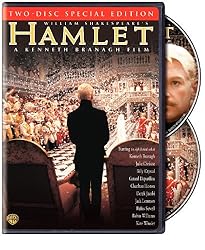
William Shakespeare's Hamlet (Two-Disc Special Edition) (1996) Review

William Shakespeare's Hamlet (Two-Disc Special Edition) (1996)
Average Reviews:

(More customer reviews)
Part of the genius of Branagh's interpretation of Hamlet is in the use of the techniques of the cinema to enhance the production. Branagh has not condensed the acts like some mass market soup, as was done in Olivier's 1948 Oscar-winning production, or in, say, Zeffirelli's 1989 Hamlet lite starring Mel Gibson (both excellent, though, within their scope), but has kept every word while directing our understanding so that even those only casually familiar with the play might follow the intent and purpose with discernment. Recall that for Shakespeare--the ultimate actor's playwright who wrote with precious few stage directions--interpretation was left to the direction and the actors, an open invitation that Branagh rightly accepts.
The use of flashback scenes of things implied, such as the amorous union of Ophelia and her Lord Hamlet abed, or of a vast expanse of snow darkened with distant soldiers to represent the threat of Fortinbras' army from without, and especially the vivid remembrance in the mind's eye of the new king's dastardly deed of murder most foul, helps us all to more keenly appreciate just what it is that torments Hamlet's soul. I also liked the intense closeups. How they would have bemused and delighted an Elizabethan audience.
Branagh's ambitious Hamlet is also one of the most accessible and entertaining, yet without the faintest hint of any dumbing down or abbreviation. A play is to divert, to entertain, to allow us to identify with others whose trials and tribulations are so like our own. And so first the playwright seeks to engage his audience, and only then, by happenstance and indirection, to inspire and to inform. Shakespeare did this unconsciously, we might say. He wrote for the popular audience of his time, a broad audience, it should be noted, that included kings and queens as well as knaves and beggars, and he reached them, one and all. We are much removed from those times, and yet, this play, this singular achievement in theatre, still has the power to transcend mere entertainment, to fuse poetry and story, as well as the high and the low, and speak once again to a new audience twenty generations removed.
Branagh himself is a wonderful Hamlet, perhaps a bit of a ham at times (as I think was Shakespeare's intent), a prince who is the friend of itinerant players. He also lacks somewhat in stature (as we conceive our great heroes); nonetheless his interpretation of the great prince's torment and his singular obsession to avenge his father's murder speaks strongly to us all. Branagh, more than any other Hamlet, makes us understand the distracted, anguished and tortured prince, and guides us to not only an appreciation of his actions, wild and crazy as they sometimes are, but to an identification and an understanding of why (the eternal query) Hamlet is so long in assuming the name of action. In Branagh's production, this old quibble with Hamlet's character dissolves itself into a dew, and we realize that he was acting strongly, purposely all the while. He had to know the truth without doubt so that he might act in concert with it.
I was also very much impressed with Derek Jacobi's Claudius. One recalls that Jacobi played Hamlet in the only other full cinematic production of the play that I know of, produced in 1980 by the BBC with Claire Bloom as Gertrude; and he was an excellent Hamlet, although perhaps like Branagh something less than a massive presence. His Claudius combines second son ambition with a Machiavellian heart, whose words go up but whose thoughts remind below, as is the way of villains everywhere.
Kate Winslet is a remarkable Ophelia, lending an unusual strength to the role (strength of character is part of what Kate Winslet brings to any role), but with the poor, sweet girl's vulnerability intact. She does the mad scene with Claudius as well as I have seen it done, and of course her personal charisma and beauty embellishes the production.
Richard Briers as Polonius, proves that that officious fool is indeed that, and yet something more so that we can see why he was a counselor to the king. The famous speech he gives to Laertes as his son departs for France, is really ancient wisdom even though it comes from a fool.
Julie Christie was a delight as the besmirched and wretched queen. In the bedroom scene with Hamlet she becomes transparent to not only her son, but to us all, and we feel that the camera is reaching into her soul. She is outstanding.
The bit players had their time upon the stage and did middling well to very good. I liked Charlton Heston's player king (although I think he and John Gielgud might have switched roles to good effect) and Billy Crystal's gravedigger was finely etched. Only Jack Lemon's Marcellus really disappointed, but I think that was mainly because he was so poorly cast in such a role. Not once was he able to flash the Jack Lemon grin that we have come to know so well.
The idea of doing a Shakespearean play with nineteenth century dress in the late twentieth century worked wonderfully well, but I know not why. Perhaps the place and dress are just enough removed from our lives that they are somewhat strange but recognizable in a pleasing way. And perhaps it is just another tribute to the timeless nature of Shakespeare's play. The mirrors in the great hall added to the effect of a vast and indifferent castle environment, and in the scene with Ophelia and Laertes returned tended to magnify the focus.
There is so much more to say about this wonderful cinematic production. It is, all things considered, one of the best Hamlets ever done. Perhaps it is the best. See it, by all means, see it for yourself.

Click Here to see more reviews about: William Shakespeare's Hamlet (Two-Disc Special Edition) (1996)

HAMLET - DVD Movie

Buy NowGet 11% OFF

Click here for more information about William Shakespeare's Hamlet (Two-Disc Special Edition) (1996)

Friday, September 23, 2011

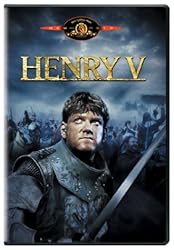
Henry V (1989) Review

Henry V (1989)
Average Reviews:

(More customer reviews)
This is a sweeping statement, but true nonetheless: I believe that Kenneth Branagh's HENRY V is the greatest screen adaption ever done of Shakespeare. Period. Better than Olivier (although he was great in a very diferent way). Better than any version of Hamlet (even Branagh's, which is the best of the Hamlets). Better than anything else.
Why do I say this? Simply because no other film adaptation of Shakespeare has captured the essence of what the Bard was trying to say while adding a modern perspective in the process, all in a manner that is readily accessible to a mass audience. Yet that is precisely what this film does.
By sheer genius, Branagh was able to present HENRY V in all of its nationalistic glory, just as Shakespeare wrote it, while at the same time adding an anti-war footnote that serves both as counterpoint and commentary on the Bard's message. The contrast betwen the St. Crispin's Day speech as presented here (in which we are made to feel the real power behind Shakespeare's words) and the gritty, realistic presentation of the battle itself which follows is proof of my assertion.
It's all here: Lessons on history, loyalty, and the qualities of leadership, all wrapped in a fiercely entertaining package. Branagh's great accomplishment is to bring the piece to life without the slightest bit of stuffiness or anachronism, and even to add his own touch to an unapproachable masterpiece. This, his first film, remains his crowning achievement. I think the Bard would approve.

Click Here to see more reviews about: Henry V (1989)

He ruled a massive empire...and fought a mighty war! Kenneth Branagh, Paul Scofield, Derek Jacobi, Ian Holm, Emma Thompson and Judi Dench star in this heroic, action-packed epic based on the timeless play by William Shakespeare. "Magnificent, passionate and steeped in powerful emotion" (The Washington Post), Henry V is a "stunning," (Leonard Maltin) OscarÂ(r)-nominated* adventure that takes its place amongst the greatest war films of all time.Having recently been crowned King of England, Henry (Branagh) commands a massive invasion to assert what he believes is his legal right to the throne of France. But a mighty army stands in his wayÂ...and the young monarch must rely on untested reserves of courage and cunning as he personally leads his outnumbered forces into a desperate battle for the honor and glory of the British Empire. *1989: Director, Actor (Branagh), Costume Design (winner)

Buy NowGet 20% OFF

Click here for more information about Henry V (1989)

Tuesday, September 13, 2011

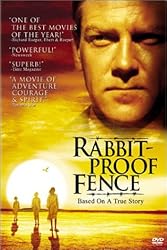
Rabbit-Proof Fence (2002) Review

Rabbit-Proof Fence (2002)
Average Reviews:

(More customer reviews)
Between 1905 and 1971, the Australian government had a horrible policy. They forcibly removed all half-caste Aboriginal children to special training schools. The grown daughter of one of these children wrote a book about her mother's experiences. This film is an adaptation of that book.
The story takes place in 1931, when Molly, then 14, her sister Daily, then 8, and her cousin Gracie, then 10, are literally torn from the arms of their mothers, put in a cage, and taken 1,200 miles away to a school which is actually a sort of prison. Here, they are forbidden to speak their own language, they have to attend a Christian church, and are taught the ways of the white Australian culture around them. Led by Molly, the girls run away. And most of the film is the odyssey of their trek back home, following the rabbit-proof fence that bisects Australia, constructed to keep rabbits out of the pastureland.
The villain is clearly the white director of the school. It is amazing, but he actually believes in the racial theories that were prevalent at the time. He believes he is helping them and plays his role well, coming across as stupid and misguided rather than evil. The Aboriginal girls are all unknowns, and terrific actresses, as are the women who play Molly and Daisy's mother and grandmother. The courage and determination of the girls during their three-month journey, the people they meet along the way, and their efforts to dodge the trackers who have been sent to retrieve them by the school, is truly inspiring. This is all set against the backdrop of the Australian outback; the cinematography certainly captures its beauty.
The film is 94 minutes long and moves quickly. I immediately identified with the girls and felt their fear as well as their bravery as they made their way across the Australian continent. In a postscript to the story, we learn more about their lives. It did not turn out to be pretty. But two of the girls have survived into their nineties, and we meet them briefly. They are strong women with weathered faces, one of them walking with a cane, but clearly at home in their Outback surroundings.
The film is a lesson in inspiration and courage as well as a geography and history lesson about Australia. I loved it and highly recommend it.

Click Here to see more reviews about: Rabbit-Proof Fence (2002)

RABBIT-PROOF Fence -- featuring the Golden Globe-nominated score by Peter Gabriel -– is a powerful true story of hope and survival and has been met with international acclaim! At a time when it was Australian government policy to train aboriginal children as domestic workers and integrate them into white society, young Molly Craig decides to lead her little sister and cousin in a daring escape from their internment camp. Molly and the girls, part of what would become known as Australia's "Stolen Generations," must then elude the authorities on a dangerous 1,500-mile adventure along the rabbit-proof fence that bisects the continent and will lead them home. As shown by this outstanding motion picture, their universally touching plight and unparalleled courage are a beautiful testament to the undying strength of the human spirit!

Buy NowGet 17% OFF

Click here for more information about Rabbit-Proof Fence (2002)

Friday, June 17, 2011

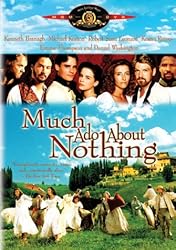
Much Ado About Nothing (1993) Review

Much Ado About Nothing (1993)
Average Reviews:

(More customer reviews)
Since his Oscar-nominated "Henry V" adaptation, Kenneth Branagh has come up with a simple, effective recipe: Blend 3 parts English actors well-versed in all things "Bard" with 1 or 2 parts Hollywood, sprinkle the mixture liberally over one of Shakespeare's plays, lift the material out of its original temporal and local context to provide an updated meaning, and garnish it by casting yourself and, until the mid-1990s, (then-)wife Emma Thompson in opposite starring roles.
In "Much Ado About Nothing," that formula works to near-perfection. A comedy of errors possibly written in one of the Bard's busiest years (1599) - although as usual, dating is a minor guessing game - "Much Ado" lives primarily from its timeless characters, making it an ideal object for transformation a la Branagh. Thus, renaissance Sicily becomes 19th century Tuscany (although the location's name, Messina, remains unchanged); and the intrigues centering around the battle of the sexes between Signor Benedick of Padua (Branagh) and Lady Beatrice (Thompson), the niece of Messina's governor Don Leonato (Richard Briers), and their love's labors won - initially the play's intended title; Benedick and Beatrice are a more liberated version of the earlier "Love's Labor's Lost"'s Biron and Rosaline - as well as the schemes surrounding the play's other couple, Benedick's friend Claudio (Robert Sean Leonard) and Beatrice's cousin Hero (Kate Beckinsale) become a light-hearted counterpoint to the more serious, politically charged intrigues of novels such as Stendhal's "Charterhouse of Parma:" Indeed, the military campaign from which Benedick and Claudio are returning with Don Pedro, Prince of Aragon (Denzel Washington) at the story's beginning could easily be one associated with Italy's 19th century struggle for nationhood.
While according to the play's conception it is ostensibly the relationship between Hero and Claudio that drives the plot - as well as the plotting by Don Pedro's illegitimate brother, Don John (Keanu Reeves) - Beatrice and Benedick are the more interesting couple; both sworn enemies of love, they are not kept apart by a scheming villain but by their own conceit, and are brought *together* by a ruse of Don Pedro's (although even that wouldn't have worked against their will: "Thou and I are too wise to woo peaceably," Benedick tells Beatrice.) And while Don John's machinations create much heartbreak and drama once they have come into fruition, the story's highlights are Benedick's and Beatrice's battles of wits; the sparks flying between them from their first scene to their last: even in front of the chapel, they still - although now primarily for their audience's benefit - respond to each other's question "Do not you love me?" with "No, no more than reason," and when Benedick finally tells Beatrice he will have her, but only "for pity," she tartly answers, "I would not deny you; - but ... I yield upon great persuasion; and partly to save your life, for I was told you were in a consumption" - whereupon Benedick, most uncharacteristically, stops her with a kiss.
Branagh's and Thompson's chemistry works to optimum effect here; and while every Kenneth Branagh movie is as much star vehicle for its creator as it is about the project itself, Benedick's conversion from a man determined not to let love "transform [him] into an oyster" into a married man (because after all, "the world must be peopled. When I said I would die a bachelor I did not think I should live - till I were married"!) is a pure joy to watch. Emma Thompson's Beatrice, similarly, is an incredibly modern, independent young woman; and scenes like her advice to Hero not to blindly follow her father's (Don Leonato's) wishes in marrying but, if necessary, "make another courtesy and say, Father, as it please *me*" only enhance the play's and her character's timeless quality.
Yet, while the leading couple's performances are the movie's shining anchor pieces, there is much to enjoy in the remaining cast as well: Richard Briers's Don Leonato, albeit more English country squire than Italian nobleman, is the kind of doting father that many a daughter would surely wish for; and what he may lack in Italian flavor is more than made up for in Brian Blessed's Don Antonio, Leonato's brother. Kate Beckinsale is a charming, innocent Hero and well-matched with Robert Sean Leonard's Claudio (who after "Dead Poets Society" seemed virtually guaranteed to show up in a Shakespeare adaptation sooner or later); as generally, leaving aside the appropriateness of American accents in a movie like this, the Hollywood contingent acquits itself well. Washington's, Leonard's and Brier's "Cupid" plot particularly is a delight (even if the former might occasionally have gained extra mileage enunciation-wise). Keanu Reeves, cast against stereotype as Don John, is a bit too busy looking sullen to realize the role's full sardonic potential: "melancholy," in Shakespeare's times, after all was a generic term encompassing everything from madness to various saner forms of ill humor; and I wonder what - but for the generational difference - someone like Sir Ian McKellen might have done with that role. But as a self-described "plain-dealing villain" Reeves is certainly appropriately menacing. Michael Keaton's Dogberry, finally, is partly brother-in-spirit to Beetlejuice, partly simply the eternal stupid officer; the play's boorish comic relief and as such spot-on, delivering his many malaproprisms with his tongue firmly planted in his cheek.
The cast is rounded out by several actors who might well have demanded larger roles but nevertheless look ideally matched for the parts they play, including Imelda Staunton and Phyllida Law as Hero's gentlewomen Margaret and Ursula, Gerard Horan and Richard Clifford as Don John's associates Borachio and Conrade, and Ben Elton as Dogberry's "neighbor" Verges. (In addition, score composer Patrick Doyle stands in as minstrel Balthazar.) With minimal editing of the play's original language, a set design making full use of the movie's Tuscan setting, and lavish production values overall, this is a feast for the senses and, on the whole, an adaptation of which even the Bard himself, I think, would have approved.
Also recommended:
The Oxford Shakespeare: The Complete Works 2nd Edition
Love's Labour's Lost
Henry V
William Shakespeare's Hamlet (Two-Disc Special Edition)
BBC Shakespeare Comedies DVD Giftbox
BBC Shakespeare Tragedies DVD Giftbox
Olivier's Shakespeare - Criterion Collection (Hamlet / Henry V / Richard III)
William Shakespeare's The Merchant of Venice
Richard III
The Complete Arkangel Shakespeare: 38 Fully-Dramatized Plays

Click Here to see more reviews about: Much Ado About Nothing (1993)

Full of "sparkling merriment" (The Hollywood Reporter), this sexy, sunny comedy positively sizzles as one set of lovers battles against a dirty trick, and another set simply battleseach other! Adapted by Oscar® nominee* Kenneth Branagh and featuring an all-star cast, this charming romp "casts the battle of the sexes in the form of an elegant dance" (The New York Times).A military war has just ended, but the "merry war" between Beatrice (Emma Thompson) and Benedick (Branagh) rages on! Can their friends trick them into making love instead? For that matter, can another couple's devotion survive the evil Don John's (Keanu Reeves) vicious lies? It's up to the blundering constable (Michael Keaton) to save the day so that the course of true love may yet run smooth!*1989: Director, Actor, Henry V; 1992: Short Film-Live Action, Swan Song; 1996: Adapted Screenplay, Hamlet

Buy NowGet 27% OFF

Click here for more information about Much Ado About Nothing (1993)